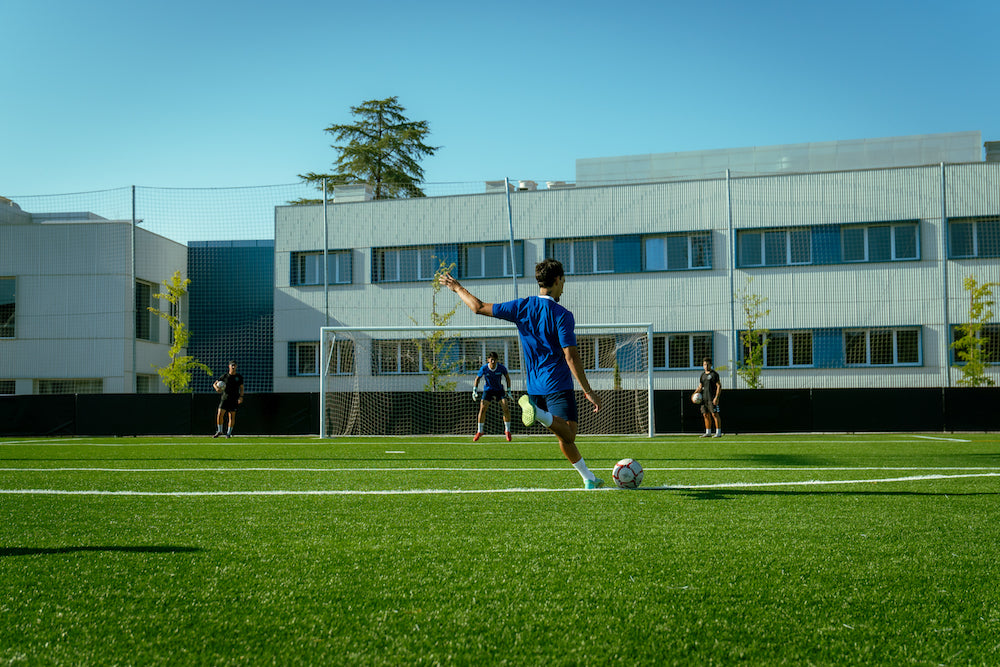


Sports psychology for youth athletes in Houston can help young soccer players understand the mental side of the game, including attention, confidence, emotions, and response to pressure. At GFI Academy, families can consider sports psychology as a focused service alongside the club's wider player-development environment, which includes the Players of Life program. These are connected by a whole-player philosophy, but they are not the same offering. For broader context, see GFI Academy's goalkeeper training, sports psychology, and specialty programs overview.
Contact GFI Academy to discuss your player's next step
Parents often look for practical answers: What happens in a session? Is it only for players who are struggling? How does it fit with team training? The short answer is that mental performance work can be useful for many kinds of players. It should complement, not replace, good coaching, thoughtful practice, rest, and family support. This guide explains the distinction and offers questions to help you decide what may fit your child.
What should families know about sports psychology for youth athletes houston?
For families exploring sports psychology for youth athletes in Houston, the simplest definition is focused mental-performance coaching for a young athlete. It can help a player notice how attention, confidence, emotions, and pressure affect the way they prepare and participate. At GFI Academy, the service is described as one-on-one support for beginner-to-advanced athletes ages 9-19, offered in person or through Zoom. Families should confirm current format and availability on the GFI Academy sports psychology page.
Topics may include game anxiety, fears, in-game focus, decision-making, long-term pathways, and pressures connected with school or home. That does not mean every player needs the same technique, or that coaching can guarantee a particular result. The purpose is to give an athlete age-appropriate language and practical ways to reflect on their experience, then connect those ideas to training and everyday soccer.
This service is distinct from GFI Academy's Players of Life program. Players of Life is a structured whole-person development program for competitive players, with areas that include soccer, leadership, social responsibility, and education. Sports psychology is a separate, more focused option for mental-performance goals and personal circumstances. Both can fit within a developmental environment, but one should not be presented as a substitute for the other.
Families should also understand the scope. GFI's offering is coaching, not clinical therapy or diagnosis. If a child may need mental-health treatment, or if distress extends beyond ordinary sport-related concerns, parents should seek an appropriately licensed healthcare professional. Research can be encouraging while still requiring careful interpretation. A review available through the National Library of Medicine discusses psychological skills approaches in youth sport and the limits of the available evidence.
The right starting point is a low-pressure conversation about what the player is experiencing, what they want support with, and whether this type of service fits their age, goals, and wellbeing.
Talk with GFI Academy about sports psychology for your player
What is the GFI Players of Life program?
Players of Life is GFI Academy's structured whole-person development program for competitive players. Its areas include soccer development through Individual Development Plans, leadership, social responsibility, and education on topics such as nutrition, body care, and social media responsibility. The program reflects the idea that a player's growth includes character and life skills as well as performance on the field.
GFI describes automatic enrollment for competitive players in its 12-year Players of Life program. That makes it part of the competitive-player experience, rather than an optional sports psychology appointment. The broader approach fits GFI's Players Centric Methodology, which considers technical, tactical, physical, cognitive, and personal development.
It is helpful to keep the terms distinct. Players of Life is a structured program of development across several areas. Sports psychology is a separate specialized service focused on mental performance. One does not automatically mean a player is receiving individual counseling, and the availability of a program does not mean every child has the same needs. Families can ask GFI how the current service is arranged and what is appropriate for their player.
How does mental performance coaching work alongside technical training at GFI?
Technical training helps a player improve soccer actions, such as passing, receiving, or finishing. Mental performance work considers how the player prepares, focuses, responds, and learns in sport. Those areas can support one another: a player might practice a technical skill at training and also think about how to stay engaged after an unsuccessful attempt. The aim is not to separate the mind from the game, but to help the player bring attention and intention to their development.
GFI's player-centered model includes technical, tactical, physical, cognitive, and personal qualities. Its goalkeeper training, sports psychology, and specialty programs overview provides context for services beyond regular team training. Families considering multiple forms of support can compare the focus and time commitment before adding anything to an already full schedule.
GFI's Players of Life program and specialized sports psychology can be understood as different layers of support:
- Team and technical training: the player learns and applies soccer skills in the training environment.
- Players of Life: competitive players take part in structured development that includes leadership, education, social responsibility, and soccer.
- Sports psychology: a focused service that addresses mental performance topics relevant to the player's sport experience.
GFI's company information identifies Luis Poblacion as its sports psychologist, with a Master's in Mental Performance and experience with Cruz Azul F.C. Families should confirm the current format, suitability, and availability directly with GFI rather than assume a specific service plan from a general description.
What should families expect from a sports psychology session?
Session structure and frequency depend on the service plan and the player's needs, so ask GFI for current details before making a decision. As a starting point, a family can prepare to discuss the player's goals, the situations where support may be useful, and what the player hopes to gain. A young athlete should have a voice in the conversation, rather than feeling that adults are arranging help solely to fix a result.
Before a first appointment, consider writing down one or two examples, not a long list of every mistake. A specific example makes the conversation easier to focus. For instance, a player might describe losing concentration after conceding a goal, feeling tense before tryouts, or having difficulty moving on after a missed chance. These are examples of topics to raise, not a diagnosis or a promise that a particular technique will solve them.
- Ask the player what they want help with. Use open questions such as, "When does soccer feel hardest lately?" or "What would you like to feel more prepared for?"
- Choose a small, observable goal. A goal such as using a reset routine after a mistake is easier to discuss and practice than a broad demand to "be more confident."
- Keep communication supportive. Ask what the player is comfortable sharing with a parent or coach, and clarify how communication works before sessions begin.
- Review what is useful. After an agreed period, ask whether the player is using the ideas and whether the focus should change. Progress can involve learning and consistency, not only match statistics.
A good fit should respect the player's age, perspective, and wellbeing. The goal is not to put extra pressure on a child to perform, but to give them a constructive way to understand their experience and build skills relevant to their goals. If the player does not want support, start with a conversation and avoid presenting the service as a punishment for a mistake or a poor performance.
How can sports psychology for youth athletes houston support families between sessions?
Support between sessions should feel like part of everyday family life, not another performance test. A calm, brief check-in can help a young player notice what they are learning without turning every car ride home into a review of mistakes. Try asking, "What is one thing you learned today?" or "What felt good, and what would you like to work on next time?" Let the player decide whether to continue the conversation.
Parents can also help connect a session topic to a real soccer moment. If a player loses possession and becomes frustrated, ask what they noticed and what the next useful action might be. The goal is not to suppress frustration or demand constant positivity. It is to help the player recognize an emotion and consider a manageable response that fits the guidance from the provider or coach.
Process goals can make that support more practical. A result goal, such as winning or making a particular team, depends partly on other people and circumstances. A process goal focuses on an action the player can attempt, such as scanning before receiving the ball, communicating with a teammate, or returning attention to the next defensive task. Process goals do not guarantee a result, but they give the player something specific to practice and notice.
Each child and situation is different, so avoid prescribing a technique as though it works for everyone.
Keep expectations age-appropriate and flexible:
- Younger players: Use short explanations and one simple idea at a time. Encourage effort, listening, and enjoyment rather than lengthy analysis.
- Older players: Invite more ownership over goals, practice choices, and reflection. Ask what kind of support feels useful.
- Players under stress: A tired, overwhelmed, or uninterested athlete may need rest, a lighter conversation, or time before discussing the experience.
- Every player: Leave room for school, sleep, friendships, and interests outside soccer.
Coordinate carefully when a parent, coach, and sports psychology provider are all involved. If the player agrees, ask how a skill being discussed might relate to the team environment. Keep responsibilities clear: the provider addresses the service's focus, the coach guides soccer learning, and the family offers steady support. Ask directly what information can be shared and how parent involvement works. Do not ask a child to relay sensitive details or treat a private session as a report card.
GFI describes its sports psychology service as mental performance coaching, not clinical treatment. If concerns extend beyond sport performance or a child may need mental-health care, pause the performance discussion and contact an appropriately licensed healthcare professional. Families can review GFI's sports psychology information and confirm current details that fit their player's needs.
How do Players of Life and sports psychology compare?
The following comparison can help parents decide what questions to ask. It does not replace confirmation of current service details with GFI Academy.
| Support. | Main focus. | Who it is for. | Cost information. |
|---|---|---|---|
| Players of Life. | Structured development across soccer, leadership, social responsibility, and education. | Competitive players are described as automatically enrolled. | No separate price is listed in the supplied program information. |
| Sports psychology. | Mental performance topics connected to the player's sport experience. | Families exploring focused support for a player. | $108 per session to $276 per month for unlimited sessions, per GFI's current content guidance. |
| Team training. | Technical, tactical, physical, and team development through soccer training. | Players enrolled in a GFI soccer program. | Depends on the selected program; confirm current program fees. |
These are not competing choices. A family might start with the support already included in the player's program, then ask whether specialized sessions address a particular need. Or, a player may benefit from focusing on team training and family conversations without adding a separate service. The right choice depends on the player's needs, interest, schedule, and the details GFI confirms.
How can you add sports psychology to your player's GFI program?
Sports psychology pricing ranges from $108 per session to $276 per month for unlimited sessions, according to GFI's provided program guidance. Confirm current availability, what the plan includes, how sessions are scheduled, and whether the quoted option suits your player before enrolling. Ask GFI directly about current consultation options, format, and availability rather than assuming a particular offer. Do not assume the monthly option is the best value without checking the player's likely needs and availability.
For a parent comparing services, these questions can make an initial inquiry more useful:
- What age groups and player concerns are currently a fit for the service?
- What is the session format, and how long does a session last?
- Does the player meet individually, with a parent, or in another format?
- How does the provider protect the young player's privacy while keeping parents appropriately informed?
- What does the session or monthly option include, and what is the cancellation or rescheduling policy?
- How will the player and family decide whether the work is helpful?
If your child is still exploring soccer, you can also learn about the range of GFI Academy youth soccer programs in Greater Houston. Players already considering a more demanding pathway may find it useful to review signs a player may be ready for competitive soccer and GFI's guide to competitive youth soccer in Houston. Families focused on a particular competition can also read GFI's parent guide to DPL soccer or its overview of GA Aspire.
Ask GFI Academy about sports psychology and the Players of Life program
Frequently asked questions
Is sports psychology only for players who are struggling?
No. Families may explore mental performance support to help a player prepare, focus, or reflect on development, not only in response to a problem. The service should fit the player's own goals and wellbeing.
Is Players of Life the same as sports psychology?
No. Players of Life is GFI's structured program for competitive players, covering soccer, leadership, social responsibility, and education. Sports psychology is a distinct specialized service with a mental-performance focus.
How much does sports psychology at GFI cost?
GFI's provided pricing guidance lists $108 per session and $276 monthly for unlimited sessions. Confirm current availability and what each option includes with GFI Academy.
Will sports psychology guarantee better match results?
No. Mental performance support cannot guarantee wins, selection, or a particular statistical outcome. Its purpose is to support learning and useful skills; each player's experience will differ.
Choose support that fits the whole player
Youth soccer development includes more than technical ability or a result on match day. GFI's Players of Life program offers a broad development framework for competitive players, while sports psychology provides a separate way to explore mental performance. Start with the young player's perspective, ask clear questions about fit and format, and choose support that strengthens growth without adding unnecessary pressure.