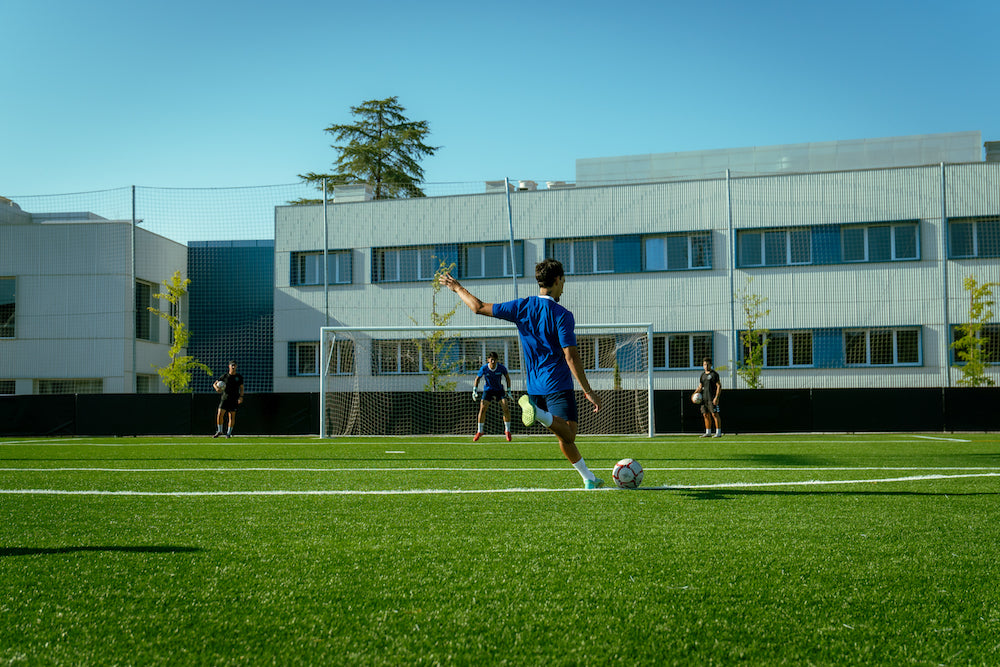


Choosing a soccer program is not only about finding an open registration spot. The right fit should match your child's age, interests, confidence, and goals. It should also work for your family's drive time, schedule, and budget. In Greater Houston, families can choose among recreational introductions, structured competitive teams, and high-performance pathways. A thoughtful comparison matters.
Explore GFI Academy's youth soccer programs to compare the right starting point for your player.
The best youth soccer academy houston option offers age-appropriate coaching, a clear development pathway, a healthy team culture, and practical communication. Look beyond game results and ask how the program will help your child grow as a player and as a person.
GFI Academy serves players from recreation through competitive and high-performance programs, with active locations across The Woodlands/Spring, Grand Oaks, Central Houston/Spring Branch, and Sugar Land. Before comparing program names, start with the outcomes your child should experience each season: enjoyment, meaningful challenge, skill development, belonging, and room to progress.
What Should Your Child Get From a Youth Soccer Program?
The right program should give your child more than a place to play. It should create a positive environment where they enjoy showing up, receive challenges that match their age and experience, and build skills that support their next step. For parents comparing a youth soccer academy Houston families can trust, fit matters more than a glossy promise or a club's reputation alone.
Enjoyment and belonging
Children learn best when they feel welcome and confident enough to try. Ask whether beginners and experienced players are supported without being embarrassed or overlooked. A healthy program makes room for effort, mistakes, friendships, and encouragement. Teammates should learn to communicate and respect one another, while coaches should create an atmosphere where every player has a meaningful role.
The CDC recommends that children and adolescents have activity options that are varied, age appropriate, and enjoyable. That guidance is useful context for soccer families: the best program is one your child can participate in consistently and still look forward to attending.
Age-appropriate challenge and development
A four-year-old beginner does not need the same training experience as a teenager preparing for a demanding competitive pathway. Look for clear differences in coaching, expectations, field activities, and competition as players mature. The program should stretch your child without making every session feel like a test.
Development should also be broader than scoring goals. Parents can ask how the curriculum builds technical ability, decision-making, movement, teamwork, confidence, and personal responsibility. GFI describes its Players Centric Methodology as European-influenced and player-centered, with attention to technical, tactical, physical, cognitive, and personal qualities. Its Players of Life program adds character and education to the development conversation. Families can explore the GFI Recreation program for an example of how an inclusive entry point may support that approach.
A pathway that can grow with your family
Needs change as a player gains experience. A family may begin with recreation, then consider competitive soccer, high performance, or another option later. GFI documents a pathway from recreation through competitive, high-performance, and USL2 pre-professional programs. That does not mean every player should pursue the highest level. It means parents can ask whether advancement is available without pressuring a child into it.
Logistics your household can sustain
Fit also includes the practical details. Consider the drive, training times, school and family commitments, game expectations, total cost, and how easily parents can receive updates. A program that looks ideal on paper will not serve your child well if attendance becomes stressful or communication is unclear. Before enrolling, ask who answers questions, how schedules are shared, and what support is available when your child's goals change.
How Do You Compare a Youth Soccer Academy Houston Families Can Trust?
A strong youth soccer academy should make the next step clear without pushing every player into the same level. The right fit depends on age, experience, confidence, goals, and the amount of time a family can realistically commit. Parents should look for a pathway that lets a child enjoy the game now while building skills for future opportunities.
At GFI Academy, the pathway begins with inclusive recreation and can progress into competitive and high-performance soccer. You can review the full range of GFI youth soccer programs before deciding which environment best matches your player.
Recreation: A welcoming starting point
Recreation is designed for players who are learning the game, returning to soccer, or looking for a positive and structured activity without the pressure of formal competition. GFI Recreation includes Junior Academy for ages 4-8 and Recreation Academy for ages 9-14. It welcomes all skill levels in a non-competitive, in-house league environment.
The experience still includes meaningful coaching and regular practice. GFI Recreation provides two weekly training sessions and Saturday in-house games, giving players repeated opportunities to practice technique, understand teamwork, and gain confidence. Families can learn more about the GFI Recreation program and consider whether its pace suits their child's current needs.
Competitive: More structure and match experience
Competitive soccer is a better fit for players who want more demanding training, regular league play, and a stronger commitment to team development. GFI Competitive programs serve players born from 2017 through 2006. Teams participate in local or regional play, including South Texas and Houston leagues, tournaments, and showcases.
That environment asks players to apply skills under pressure and to take greater responsibility for preparation, consistency, and team behavior. It also asks more from families, including schedule planning and a willingness to support the player's development across a season. Explore the competitive soccer program to understand its intended player profile and expectations.
High Performance: Advanced development and pathways
High Performance is intended for ambitious players who are ready for advanced training and a higher level of competition. It is not simply a label for a child who wants to win more games. Parents should ask whether the environment will challenge the player's decision-making, technical execution, physical preparation, and personal responsibility in an age-appropriate way.
GFI high-performance offerings include MLS Next, DPL, and GA Aspire pathways where applicable. The high-performance soccer pathway provides a starting point for families evaluating whether advanced competition and long-term development align with their player's goals.
| Level. | Best fit. | Training and competition. | Parent question. |
|---|---|---|---|
| Recreation. | Beginners and players seeking a low-pressure introduction. | Two weekly training sessions and Saturday in-house games. | Will my child feel welcomed and enjoy learning? |
| Competitive. | Players ready for structured team development. | Local or regional leagues, tournaments, and showcases. | Can our family support the seasonal commitment? |
| High Performance. | Ambitious players pursuing advanced development. | Advanced pathways, including MLS Next, DPL, and GA Aspire where applicable. | Does this challenge match my player's goals and readiness? |
A pathway matters because development is not always linear. A recreational player may discover a stronger competitive interest, while a competitive player may need time to build readiness before moving higher. When program levels connect, families can reassess fit as the player grows instead of starting over after every change in ambition. The best comparison is therefore not only about today's team. It is about whether the academy can support the next appropriate step while keeping the player's long-term growth, character, and enjoyment at the center.
How Do You Evaluate Coaching and Player Development?
A strong coach does more than organize drills and games. They should understand the player's age, current ability, confidence, and next appropriate challenge. When you visit a youth soccer academy Houston families are considering, watch whether coaches explain the purpose of an activity, give players time to make decisions, and correct mistakes without embarrassing them.
Look for a complete development model
Ask how the academy defines development beyond goals, wins, or tournament results. A well-rounded methodology should address:
- Technical qualities: first touch, dribbling, passing, receiving, finishing, and the ability to use those skills under pressure.
- Tactical qualities: awareness, positioning, decision-making, support play, and understanding what to do as the game changes.
- Physical qualities: movement, coordination, balance, speed, and age-appropriate physical preparation.
- Cognitive qualities: attention, problem-solving, anticipation, and learning to recognize options rather than waiting for instructions.
- Personal qualities: confidence, discipline, resilience, teamwork, responsibility, and respect for others.
GFI Academy describes its Players Centric Methodology as European-influenced and player-centered, with technical, tactical, physical, cognitive, and personal qualities developed together. You can read more about how GFI develops players and compare that explanation with what you observe at a training session.
Ask how feedback becomes progress
Parents should be able to hear a clear answer to the question. "How will we know my child is improving?" Ask whether coaches use individual feedback. Progress conversations, age-appropriate goals, or observations across training and matches. Feedback should be specific enough to guide the next action. "Work harder" is not as useful as explaining where a player can scan, move, or choose differently.
Also ask how the program responds when a player is struggling, advanced for the group, shy, or returning after time away. A useful pathway gives players room to grow without making every child follow the same timetable. GFI's pathway extends from recreation into competitive and high-performance programs, so families can ask how movement between levels is evaluated and communicated.
Make safety and character part of the evaluation
Ask who handles injuries, how players report pain, and how the coach manages contact, fatigue, heat, and emotional pressure. Youth sports injuries can include ACL tears, muscle strains, and ankle sprains. Mayo Clinic advises early treatment when an athlete is hurt, rather than allowing a problem to become longstanding. See Mayo Clinic's youth sports injury guidance for context. An academy should be comfortable explaining its safety expectations and directing families to appropriate medical care.
Finally, ask whether the program develops the person as well as the player. GFI's Players of Life program emphasizes whole-person development, including character and education alongside soccer performance. Before enrolling, ask: What behaviors do coaches model? How are teammates treated? How are parents updated? The answers reveal whether the academy's stated methodology is reflected in the daily experience.
What Do Location, Schedule, and Communication Look Like?
A soccer program can be a strong developmental fit and still be difficult for a family to sustain if the drive, calendar, or communication process does not work. Before enrolling, compare the actual weekly routine with your family's school, work, and transportation commitments. Ask where training and games take place, how long the drive is during the hours you will travel, and whether the location remains practical throughout the season.
Start with the location your family will use most
GFI Academy's active Greater Houston locations include The Woodlands/Spring, Grand Oaks, Sugar Land, and Central Houston/Spring Branch. That footprint gives families several starting points to consider, but proximity should still be evaluated from your home, school, and regular work routes. A nearby field can make consistent attendance easier, especially for younger players and families with more than one child in activities.
The GFI Performance Center serves as a central hub. It is a 20-acre complex at 27001 Lenze Road, Spring, TX 77389, and is used for game days and administration. Review the GFI Performance Center and facilities information, then confirm which location applies to your child's specific program before making assumptions about every training or game site.
Match the weekly rhythm to your child's level
For Recreation, GFI documents two training sessions each week and Saturday in-house games. This rhythm gives beginners and developing players a regular place to learn, play, and build confidence without treating competition as the only measure of progress. Families comparing programs should ask whether the published routine is consistent across the relevant age group and location. And what happens when weather or field conditions affect an activity.
Other pathways may have different logistics. Competitive teams can include local or regional play, leagues, tournaments, and showcases, while High Performance offerings vary by pathway and applicability. Do not rely on a general club schedule to plan every week. Ask about expected travel, game-day locations, seasonal commitments, and how much notice families receive when details change.
Know how information reaches parents
GFI uses PlayMetrics for registration, schedules, and parent communication. A clear communication system matters because families need more than an enrollment link. They need timely access to schedule updates, program information, and practical next steps. During your review, ask where schedule changes are posted, who handles questions, and whether your child's team and location are connected to the same parent account.
If you need to clarify a location, schedule, or program fit before registering, contact GFI Academy directly. The right youth soccer academy in Houston is one your family can attend consistently and understand confidently, not simply one that looks appealing on paper.
Contact GFI Academy about your player's age, goals, and preferred Greater Houston location.
What Does Youth Soccer Cost, and What Should Families Ask?
Program cost is more than the number shown beside a registration button. Before choosing a youth soccer academy in Houston, ask what the fee covers, whether it is seasonal or annual. Which items are purchased separately, and how the program fits your family's schedule and goals. A clear cost conversation helps you compare programs fairly and avoid surprises after your player joins.
Start with the full cost, not just the registration fee
For GFI Academy Recreation, the published price is $380 for a full seasonal payment or $395 through the payment plan. These figures come from the company's offerings information. The recreation uniform kit is a separate $150 purchase, so uniforms should not be treated as included in the registration fee. GFI's Recreation offering includes Junior Academy for ages 4-8 and Recreation Academy for ages 9-14, with an environment designed to welcome all skill levels. Families can review the GFI Recreation program details before enrolling.
Ask whether the listed amount applies to one season or a longer commitment. GFI's primary enrollment cycles are Fall and Spring, generally August through December and January through May. Confirm the applicable cycle, payment timing, uniform process, and any current registration details before completing enrollment. Registration, schedules, and parent communication are supported through PlayMetrics, which gives families one place to manage important program information.
Match the investment to the pathway
As a player's goals and level of commitment change, the structure and cost of the program may change as well. GFI documents Competitive annual fees at approximately $1,950-$2,550. Competitive programs serve players born from 2017 through 2006 and may include local or regional play, leagues, tournaments, and showcases. Families considering this level can explore the competitive soccer program and ask which team environment best fits the player's development stage.
GFI documents High Performance annual fees at approximately $2,430-$2,890. High-performance offerings include MLS Next, DPL, and GA Aspire pathways where applicable. A family comparing this level should ask about the intended development pathway, training expectations, competition structure, and what is included in the stated annual fee. The High Performance soccer pathway page can help families begin that conversation.
Ask about payment support and family circumstances
Cost questions should be specific and comfortable. Ask whether payment plans are available, whether financial aid may apply, and when each payment is due. GFI offers payment plans and financial aid, and a 10% family discount applies for families with three or more players. Ask how a discount or aid request affects the total before registering, since the answer may depend on the program and the family's circumstances.
- Is the fee seasonal or annual?
- Are uniforms, equipment, and other required purchases separate?
- What payment plan options and financial aid information are available?
- Which training and competition activities are included?
- How will schedules, updates, and parent communication be handled?
The right choice is not automatically the lowest price. It is the program whose cost, structure, communication, and development pathway make sense for your player and your family. Getting those answers in writing makes the comparison clearer and supports a more confident decision.
What Happens After You Find a Good Fit?
Once a program appears promising, the next step is not to commit immediately. Use a short decision process that connects your child's goals, the program level, and your family's practical needs. A good youth soccer academy in Houston should make that process clear, from the first question through registration and ongoing communication.
- Define the player's current goal. Decide whether your child wants a welcoming introduction to soccer, regular skill development, structured competition, or a high-performance pathway. Consider age, experience, interest level, and how much weekly commitment is realistic. GFI's pathway begins with Recreation for ages 4-14 and continues through Competitive, High Performance, and USL2 pre-professional programs, so the starting point can change as the player develops.
- Choose the appropriate program level. Recreation includes Junior Academy for ages 4-8 and Recreation Academy for ages 9-14. It welcomes all skill levels in a non-competitive, in-house league environment. Competitive programs serve players born from 2017 through 2006 and include local or regional play, leagues, tournaments, and showcases. High-performance options include MLS Next, DPL, and GA Aspire pathways where applicable. Review the MLS Next soccer pathway if that level matches your child's goals, then ask the academy which option fits the player's current stage.
- Use the right first evaluation opportunity. Families exploring soccer or Recreation should look for a free clinic. This gives a beginner or developing player an appropriate introduction without confusing a recreational fit with a competitive evaluation. Competitive and High Performance prospects should ask about the current tryout or evaluation process. The distinction matters because the purpose is different: a clinic helps a family experience the recreational environment. While a tryout helps the academy assess fit for a more structured pathway.
- Confirm location and family logistics. Compare the drive, training expectations, and communication process before enrolling. GFI's active Greater Houston locations include The Woodlands/Spring, Grand Oaks, Sugar Land, and Central Houston/Spring Branch. Its 20-acre GFI Performance Center is at 27001 Lenze Road, Spring, TX 77389. Ask which location and schedule apply to the specific program, rather than assuming every offering follows the same rhythm.
- Register and establish follow-up. Once the fit is clear, use PlayMetrics for GFI registration, schedules, and parent communication. Save the program contact details, note any questions about next steps, and follow up if you do not know what happens after the clinic or tryout. For a direct answer about placement or enrollment, contact GFI Academy and provide the player's age, experience, goals, and preferred location.
This sequence keeps the decision centered on development rather than pressure. A player may begin in Recreation and later explore Competitive or High Performance as goals and readiness change. The most useful outcome of a clinic or tryout is clarity about the next appropriate step, not a promise of a particular result.
Ask GFI Academy about the right program, clinic, or evaluation for your player.
Frequently Asked Questions
What age is best to join a soccer academy?
There is no single best age. Choose a program that matches your child's interest, confidence, physical readiness, and goals. Younger beginners may benefit from a welcoming recreation environment, while older or more experienced players may need competitive training or a high-performance pathway. GFI Academy's Recreation program includes Junior Academy for ages 4-8 and Recreation Academy for ages 9-14, with options to progress as a player's needs change.
How do I choose a youth soccer academy in Houston?
Start by comparing methodology, coach communication, player development goals, league level, travel demands, schedule, total cost, and team culture. Ask how the academy supports beginners and how players move between levels. A convenient location matters too. GFI Academy's active Greater Houston locations include The Woodlands/Spring, Grand Oaks, Central Houston/Spring Branch, and Sugar Land. Review the available locations before committing.
How much does it cost to be in a soccer academy?
Costs vary by program and should be reviewed as a complete seasonal or annual commitment. GFI lists Recreation at $380 paid in full or $395 through a payment plan, plus a separate $150 uniform kit. Competitive fees are approximately $1,950-$2,550 annually, and High Performance fees are approximately $2,430-$2,890 annually, according to GFI's offerings information. Payment plans, financial aid, and a 10% family discount for three or more players may be available. Confirm current details on the relevant program page.
Should my child attend a clinic or a tryout?
Choose a free clinic when your family is exploring soccer or a recreation experience. Competitive and High Performance players should ask about the current tryout or evaluation process. This helps the academy understand the player's current level and goals. Before attending, confirm the age group, location, required equipment, and next steps for registration and communication.
Ready to Find the Right Soccer Path?
Contact GFI Academy to find the right soccer path for your player. Families exploring Recreation can ask about a free clinic, while Competitive and High Performance prospects can ask about the current tryout or evaluation process. You can also call the number shown on the current contact page, (281) 305-1896.