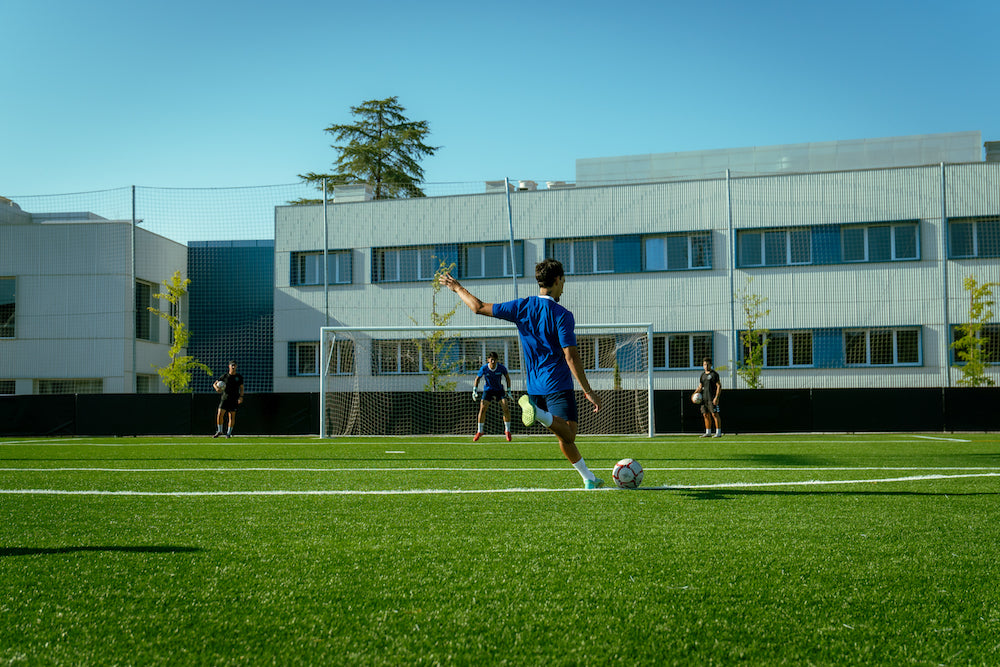


Families comparing competitive youth soccer Houston options need more than the most advanced league nearby. They should weigh a player's age or birth year, current ability, goals, appetite for travel, weekly schedule, and the kind of challenge that supports steady growth.
Explore youth soccer tryouts with GFI Academy.
For families comparing competitive youth soccer houston options, the right choice is a developmentally appropriate environment with qualified coaching, meaningful competition, clear evaluation, and a realistic commitment for the whole family. A league label can open doors, but it does not automatically make one pathway better for every player.
Greater Houston families may be considering a progression from Recreation into Competitive, then evaluating high-performance opportunities such as DPL, GA Aspire, Texas Academy, or MLS Next. Understanding what each level asks of a player, and what it gives back, makes the decision more practical. Start by looking beyond the label to the development model, team fit, logistics, and long-term purpose.
What Competitive Youth Soccer Houston Families Should Look For
Choosing a competitive program is about finding the right environment for a player's next stage. Families should look beyond a team name or league logo and ask how the academy evaluates players, structures training, supports growth, and communicates with parents.
Start with player fit, not status
A strong program should consider age or birth year, technical ability, game understanding, physical readiness, confidence, and personal goals. The right level should stretch a player without placing them in an environment where they rarely contribute or stop enjoying the game. GFI's approach is to evaluate players and place them on developmentally appropriate teams, balancing challenge and success for long-term individual development. That principle matters because the highest available team is not automatically the best team for every player.
Ask how often evaluations happen, what coaches observe, and how a player can progress when they are ready for a greater challenge. A useful conversation should address the individual player rather than rely on broad promises about exposure, wins, or future recruitment.
Look for development that is broader than match results
Competitive soccer should develop more than a player's ability to perform on game day. Ask whether training intentionally builds technical skill, tactical understanding, physical qualities, decision-making, and personal qualities such as resilience and responsibility. The United States Soccer Federation describes its development philosophy as a player-centered approach. In practice, that means coaching should account for the person and the stage of development, not treat every player as if they need the same instruction.
Parents can look for training sessions that give players meaningful decisions to make, clear feedback, and opportunities to solve problems. They should also ask how coaches measure progress beyond goals or wins. A development-focused academy can help a player become more complete while keeping expectations realistic and age appropriate.
Compare the practical commitment
Training quality is only one part of fit. Before accepting a place, clarify the expected weekly schedule, game locations, tournament or showcase commitments, travel range, season structure, communication process, and total cost. The competitive pathway at GFI serves boys and girls born from 2017 through 2006 and includes South Texas and Houston league play, tournaments, and showcases. Families can review the GFI competitive soccer teams page, then ask which expectations apply to the specific age group and team.
Finally, consider the family's routine and the player's motivation. A sustainable commitment gives an ambitious player room to improve while preserving school, health, family time, and enjoyment. The best competitive choice is the one that combines appropriate challenge, thoughtful coaching, and a manageable path forward.
How the Youth Soccer Pathway Progresses From Recreation to High Performance
A strong youth soccer pathway gives players room to grow without asking them to move faster than their development supports. At GFI Academy, the progression can begin with Recreation, continue through Competitive, and extend into High Performance. The right next step depends on the player's age or birth year, current skills, goals, readiness for greater challenge, and ability to manage the training and competition expectations.
Recreation builds the foundation
Recreation is designed for younger players who are learning the game, building confidence, and developing a positive relationship with soccer. GFI's Junior Academy serves players ages 4-8, while Recreation Academy serves players ages 9-14. Both options include professional coach-led training, two weekly sessions, and Saturday in-house games. Families can learn more about GFI Recreation programs and consider whether a structured introduction is the best fit for their player.
At this stage, progress is not measured only by speed, goals, or game results. Comfort with the ball, willingness to participate, listening, decision-making, and enjoyment all help indicate whether a player is ready for a different challenge. Some players will remain in Recreation while they strengthen these foundations. Others may be ready to explore a competitive evaluation as their skills and interest develop.
Competitive adds structure and broader competition
GFI Competitive teams serve boys and girls born from 2017 through 2006. These teams compete in South Texas and Houston leagues, along with tournaments and showcases that provide additional game opportunities. That environment can suit players who want more regular competitive demands while continuing to develop their technical, tactical, physical, cognitive, and personal qualities.
Moving into Competitive should not be treated as a permanent label or a race against other players. Coaches evaluate players and place them on developmentally appropriate teams to balance challenge and success. Families comparing GFI soccer pathways should ask what the player needs now, not simply which team name sounds most advanced. A setting that is too easy may limit growth, while one that is too demanding can undermine confidence and consistency.
High Performance requires an appropriate level of readiness
High Performance includes advanced pathways such as DPL, GA Aspire, MLS Next Gen, Texas Academy, and MLS Next. Age and birth-year eligibility vary by pathway, and the competition, training, travel, and time commitments can also differ. The GFI High Performance pathway can therefore be a relevant option for players who are prepared for a more demanding environment, rather than an automatic destination for every Competitive player.
Promotion is not automatic because development is individual. A player's technical habits, tactical understanding, physical readiness, personal commitment, and response to coaching all matter. So do family considerations such as schedule, travel, and budget. Regular evaluation and honest conversations with coaches help identify when a player is ready for more challenge. When staying in the current environment is productive, or when a different pathway would better support long-term growth.
Which Competitive and Elite Soccer Leagues Fit Different Players?
League labels help families understand the level of competition, but they should not make the decision on their own. The right fit depends on a player's birth year, current ability, development needs, goals, preferred level of challenge, and the family's capacity for training, games, travel, and showcases. GFI Academy evaluates players and places them on developmentally appropriate teams, rather than treating the highest label as the automatic best choice.
The comparison below is a starting point for families exploring competitive youth soccer in Houston. Birth-year guidance reflects GFI's published pathway descriptions. Families should confirm current team availability and placement details during the evaluation process.
GFI competitive and high-performance pathway comparison| Pathway | Player profile and age guidance | Competition context | Questions for families |
|---|---|---|---|
| GFI Competitive | Boys and girls born from 2017 through 2006 who want local or regional competitive soccer. | South Texas and Houston leagues, with additional opportunities through tournaments and showcases. | Will the training challenge my player appropriately? How does the team balance development, games, school, and family travel? |
| DPL and GA Aspire | Girls pathways generally serving players born from 2013 through 2007. DPL is positioned for players competing against top Girls Academies. GA Aspire is for high-level athletes working toward GA and beyond. | DPL teams compete regionally and nationally in the Lonestar DPL Conference, with showcase opportunities. GA Aspire is described as the second tier of the Girls Academy pathway and lists three weekly training sessions. One to two games per week, and one to two showcases per year. | Is the competitive environment suited to my daughter's readiness and goals? What training and showcase commitments can our family consistently support? |
| Texas Academy | Boys born from 2012 through 2006, for players seeking a high-performance challenge without assuming that the top label is the right placement. | GFI describes Texas Academy as the second division of MLS Next. It emphasizes local Texas competition while allowing top athletes to train alongside MLS Next teams. | Would local competition and training access support my player's next stage? How will coaches measure progress and readiness for a different level? |
| MLS Next | Boys born from 2012 through 2006 within GFI's High Performance pathway. GFI describes it as its highest level for these age groups. | GFI's published MLS Next description lists an August through June full-year season, four weekly training sessions, one to two games per week, and two to three national tournaments. | Can the player and family sustain a full-year commitment, frequent training, games, and national tournament travel while protecting school and recovery? |
| Younger bridge options | GA Futures serves girls born from 2016 through 2014 and is described as a route toward DPL and higher levels. MLS Next Gen serves driven boys born from 2015 through 2013 who aim toward MLS Next and Texas Academy. | These options help younger players build toward older high-performance pathways while continuing age-appropriate development and evaluation. | Does the player need more time to build foundations before moving up? What would meaningful progress look like over the next season? |
Families can use the GFI girls DPL pathway, GA Aspire high-performance soccer, and MLS Next development pathway pages to review the published distinctions. The most useful next step is an honest evaluation conversation focused on the player's complete development, including technical, tactical, physical, cognitive, and personal growth.
What Should Families Expect From Training, Games, and Travel?
The weekly experience can look very different depending on the team, age group, league, and stage of development. Before accepting a roster spot, ask for the expected training days, game frequency, tournament calendar, travel range, and time commitment for the full season. Schedules can change, so families should treat published examples as a guide rather than a guarantee for every team.
Training should have a clear purpose beyond preparing for the next match. Parents can ask how sessions develop technical skills, tactical understanding, physical readiness, decision-making, and personal qualities. A strong environment helps players improve over time while maintaining an appropriate balance between challenge and confidence. The highest label is not automatically the best fit if the schedule, travel, or training demands do not match the player's needs.
Training and game rhythm
GFI's published pathway examples show how commitment can increase at higher levels. GA Aspire lists three weekly training sessions, one to two games per week, and one to two showcases per year. For families considering high-performance soccer options, that rhythm is useful for understanding the difference between occasional competition and a structured development program. The actual schedule varies by team and should be confirmed with the coaching staff.
MLS Next provides another example of a full-year commitment. GFI's MLS Next page describes an 11-month season from August through June, with four weekly training sessions. One to two games per week, and two to three national tournaments during the year. That may be appropriate for a highly committed player, but it also affects homework, other activities, transportation, rest, and family weekends. Ask whether attendance expectations are realistic for your household before choosing a pathway.
Tournaments, showcases, and travel
Travel can create valuable competitive experiences, but it should have a clear developmental reason. GFI's DPL teams compete regionally and nationally in the Lonestar DPL Conference, with opportunities including the DPL Spring Showcase and Winter Showcase, plus a possible Summit Event qualification. These events may involve hotel stays, additional meals, time away from school, and several games in a short period. Clarify which events are expected, which are optional, and how far the team typically travels.
Useful questions include: What is the likely drive time for league games? How many tournaments are planned? Are showcases included in the stated fees? How much notice do families receive? Who coordinates schedules and communication? What happens when a player needs recovery time or has a school conflict? Clear answers help parents compare competitive youth soccer Houston options on the complete experience, not only the league name.
How Do Evaluations and Tryouts Work?
A tryout is not simply a test of who can score the most goals on one day. For a family comparing competitive youth soccer in Houston, it is a chance to understand whether a team. Training environment, and level of challenge fit the player's current needs and longer-term goals. The evaluation should be a two-way conversation: coaches observe the player, and parents gather enough information to make a thoughtful pathway decision.
- Start with the player's current picture. Before registering, note the player's age or birth year, current team experience, preferred position, training background, and the skills they want to improve. Be honest about what the player enjoys and where they need support. A clear starting point helps coaches evaluate fit rather than relying on a parent's preferred label for the next team.
- Review the available pathway and requirements. Read GFI Academy's youth soccer tryouts information, then confirm the current program-specific evaluation details with GFI. Requirements, team openings, and evaluation arrangements can vary by age group and program, so do not assume that one process applies to every Competitive or High Performance team.
- Prepare to show normal effort, not a performance persona. Players should arrive ready to listen, compete positively, make decisions, and respond to coaching. A useful evaluation can include technical actions, small-sided play, movement, and interactions with teammates. Players do not need to force spectacular plays. Consistent effort, awareness, coachability, and willingness to solve problems can provide a more useful picture.
- Ask how placement decisions are made. GFI states that its coaching staff evaluates players who want a Competitive or Competitive Academy team and places them on a developmentally appropriate team. That approach is designed to balance challenge and success for the individual, rather than placing every player on the highest-labeled team. Ask what the coaches observed, what the proposed team would develop, and how progress will be reviewed.
- Compare the full commitment before accepting a place. Discuss training expectations, game and tournament responsibilities, travel, communication, fees, financial-aid availability, and the seasonal calendar. The right fit must work for the player and the household. A more demanding option is not automatically better if the schedule, commute, budget, or level of challenge does not match your family's circumstances.
- Give the player room to reflect. Afterward, ask what felt encouraging, difficult, and enjoyable. Development depends on sustained engagement, not only on the outcome of a single evaluation. If you still have questions, contact GFI directly and confirm the current details before making a decision. The goal is a pathway that helps the player grow technically, tactically, physically, cognitively, and personally over time.
How Much Should Families Budget for Competitive Soccer in Houston?
Budgeting for a competitive soccer pathway starts with identifying the level that fits your player's current development needs. GFI Academy's Competitive program serves boys and girls born from 2017 through 2006 and offers local or regional league play, tournaments, and showcases. The listed annual Competitive pricing ranges from $1,950 to $2,550, depending on the program tier. Families can review the details of the GFI competitive soccer teams before deciding which environment is appropriate.
High Performance is a separate level for players ready for a more demanding development environment. GFI lists annual High Performance pricing from $2,430 to $2,890. The exact amount depends on the selected pathway and should be confirmed with GFI before registration. Families can explore the available high-performance soccer options, including the pathways that serve different player groups and competition goals.
Compare the fee to the pathway, not just the price
A higher fee is not automatically a better choice for every player. Parents should compare the intended development challenge, competition level, training expectations, travel needs, and the player's readiness. GFI evaluates players and places them on developmentally appropriate teams, balancing challenge and success for long-term individual development.
Explore GFI High Performance pathways or contact GFI Academy about the right fit.
That makes the evaluation conversation an important part of budgeting. The key question is not only, "What does this cost?" Ask what level of support and competition is appropriate for your child right now.
For younger players or families seeking an introductory option, GFI Recreation provides another budget reference point. Junior Academy serves ages 4-8, while Recreation Academy serves ages 9-14. Recreation is listed at $380 for full-season payment or $395 through the payment plan, plus a separate $150 uniform kit. This is different from Competitive and High Performance pricing, so families should compare programs based on both age and development goals.
Account for uniforms and available support
Program fees should not be treated as an all-inclusive estimate for every soccer expense. Uniforms are purchased separately through Soccer Post and are not included in registration, training, or league fees. Ask GFI to confirm the current program fee, payment schedule, and any team-specific details before enrolling.
Payment plans are available, and financial aid is available based on need for High Performance. Families with three or more players may also qualify for a 10% family discount. These options can change the timing of payments. But they do not replace the need to select a pathway that matches the player's needs and the family's schedule and budget.
What Makes a Youth Soccer Academy Developmentally Strong?
A strong academy gives families more than a team assignment or a recognizable league label. It creates an environment where coaching decisions, training content, competition, and communication all serve the player's development. Parents should be able to explain what their child is learning now, why the work suits their age and readiness, and how the next step will be decided.
Coaching that adapts to the player
Quality coaching starts with observation. Coaches should understand a player's current technical ability, decision-making, physical development, confidence, and goals before determining the right level of challenge. The objective is not to place every player on the highest-labeled team. GFI Academy states that its coaches evaluate players and place them on developmentally appropriate teams to balance challenge and success for long-term individual development. That approach can help a player grow without confusing greater pressure with better development.
Ask how coaches give feedback, how they track progress, and how they respond when a player is ready for a new challenge. Look for a clear curriculum rather than sessions built only around the next weekend's result. Coaches should also communicate with parents in practical terms, while keeping the player at the center of the learning process.
Age-appropriate, whole-player development
Children do not learn soccer in exactly the same way at every age. The US Youth Soccer Player Development Model emphasizes long-term development, age-appropriate progression, quality coaching, and learning over an early focus on winning or collecting trophies. Its framework describes different priorities across stages, including exploration and small-sided play for younger players. Technical and basic tactical development for ages 9 to 12, and increasingly integrated work as players mature. Families can review the model in the US Youth Soccer Player Development Model.
A complete methodology develops technical skill, tactical understanding, physical readiness, cognitive decision-making, and personal qualities together. At GFI, the GFI Players Centric Methodology reflects this player-centered framework. In practice, that means helping players control the ball, read the game, manage effort, solve problems, communicate, and respond constructively to setbacks. Character and education matter because soccer is part of a young person's development, not a substitute for it.
Facilities and long-term fit
Development also depends on whether the environment is practical for the family. Training space, equipment, recovery support, travel demands, schedule, cost, and a player's enjoyment all affect consistency. GFI's GFI Performance Center is a 20-acre facility in Spring, Texas, but the right choice still depends on the individual player's needs and the family's ability to sustain participation.
The best fit is the academy that offers an appropriate challenge, thoughtful coaching, and a realistic path for continued growth. A useful final question is simple: will this environment help my child become a more capable, confident, and complete player over time?
Where Can Greater Houston Families Find the Right GFI Location?
Location can shape whether a soccer pathway works for the whole family. GFI Academy's active Greater Houston footprint includes The Woodlands and Spring, Grand Oaks, Central Houston and Spring Branch, and Sugar Land. Families comparing competitive youth soccer Houston options should look beyond the advertised distance. Consider school pickup, work schedules, rush-hour traffic, training frequency, game-day travel, and whether the player can maintain that routine throughout the season.
The GFI Performance Center at 27001 Lenze Road, Spring, TX 77389 is a 20-acre facility and a central game-day and operations hub. Review the GFI Performance Center details, then ask which training and game locations apply to the specific team under consideration. A nearby practice site may be convenient, but families should also understand how often games, tournaments, or showcases require travel beyond the neighborhood.
Questions to ask before choosing a location
- Which GFI location is most practical for our player's age group and team?
- How long will the commute take during the actual training window, not just in light traffic?
- Where are regular games held, and how should we plan for tournaments or showcases?
- Does the weekly schedule fit school, homework, siblings, and family responsibilities?
- What happens if the player's development needs change during the season?
GFI's primary seasonal cycles are Fall, generally August through December, and Spring, generally January through May. Confirm current dates, training details, and team-specific locations before registering, since practical expectations can vary by program and roster. Families can review the facilities information and contact GFI Academy with questions about the best fit.
Austin and Leander may be discussed as expansion targets, but they should not be treated as established GFI locations. For current Greater Houston families, the right choice is the active site and pathway that supports consistent attendance, appropriate challenge, and a sustainable family commitment.
Frequently Asked Questions
What age do kids start playing competitive soccer?
There is no single age that fits every player. Younger athletes often begin with structured recreation, where they build confidence, coordination, and enjoyment before moving into a more competitive environment. GFI Academy offers Junior Academy for ages 4-8 and Recreation Academy for ages 9-14, then evaluates players for developmentally appropriate competitive placement. Readiness, experience, motivation, and the level of challenge a player can handle matter more than choosing the highest label as early as possible.
What are some competitive youth soccer clubs in Texas?
Families can compare local clubs by looking beyond the league name. Ask about coaching quality, player evaluation, training goals, game and travel expectations, communication, and whether the pathway serves your child's current needs. In Greater Houston, GFI Academy provides a pathway from Recreation through Competitive and High Performance programs, with additional options including DPL, GA Aspire, Texas Academy, and MLS Next. The right choice depends on fit, not a universal ranking.
What is the difference between DPL, GA Aspire, Texas Academy, and MLS Next?
These are high-performance pathways with different player groups and competition structures. At GFI, DPL and GA Aspire are girls pathways, while Texas Academy and MLS Next are boys pathways. Texas Academy is described as a second division of MLS Next, while MLS Next is the highest boys level in GFI's High Performance pathway. Birth-year eligibility, evaluation, development goals, travel, and team availability should all be confirmed before selecting a pathway.
How much time does elite youth soccer require each week?
The commitment varies by team, age, and season. GFI's MLS Next information lists four weekly training sessions, one to two games per week, and two to three national tournaments during an August through June season. GA Aspire lists three weekly training sessions, one to two games per week, and one to two showcases per year. Families should confirm the current team schedule, travel distances, school demands, and recovery expectations before committing.
Ready to Find the Right Soccer Pathway?
Every player develops differently, and the right next step depends on age, experience, goals, and readiness for a new level of challenge. GFI Academy can help your family think through the available pathway and identify whether a player evaluation makes sense. Share your player's age, current experience, and what your family hopes to achieve so the conversation can focus on a developmentally appropriate fit.