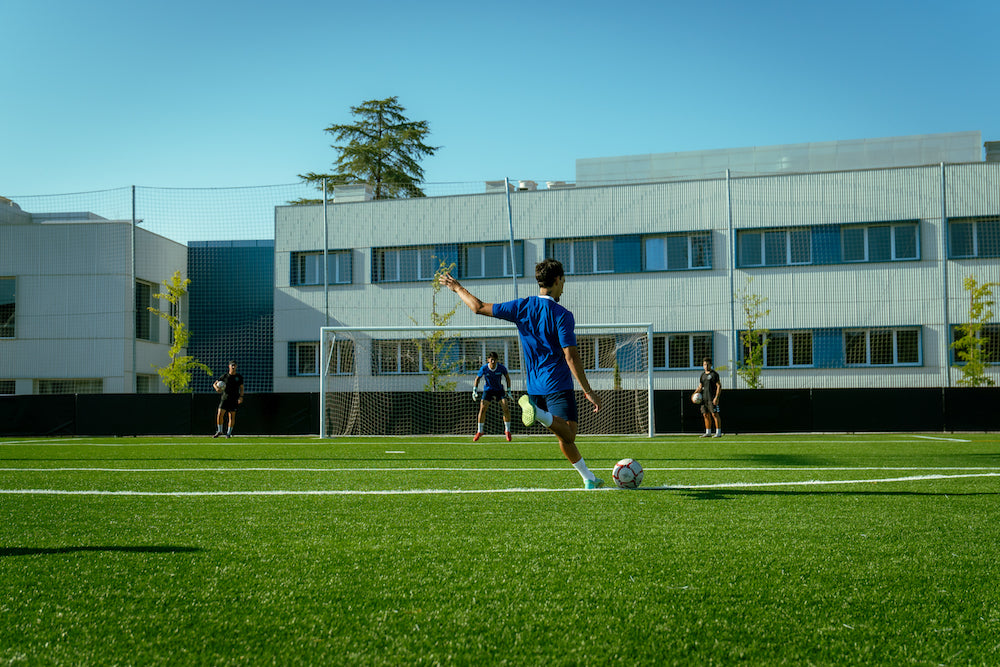


If you searched “what age should child start soccer,” you are asking a practical question: What age should a child start soccer? At GFI Academy, the first organized step is Recreation for boys and girls ages 4 to 14, not a competitive team. Junior Academy covers ages 4 to 8. Recreation Academy covers ages 9 to 14. A child does not need prior soccer, a favorite position, or a plan for a later pathway. The useful question is whether the child can enjoy a short, coached session with other children.
Reserve a free GFI Recreation clinic
Greater Houston families often hear that an earlier start creates a lasting advantage. Age can identify which group fits. It cannot predict how far a player will develop. US Youth Soccer tells clubs to build the environment around the child, especially before age 12, instead of copying an adult match. Parent support focused on development and enjoyment matters more than winning. That standard should guide a first season.
What Age Should a Child Start Soccer at GFI Academy?
GFI Recreation is the starting point for boys and girls ages 4 to 14 who want a non-competitive league. The current Recreation page splits that range into two groups. Junior Academy is for ages 4 to 8. Recreation Academy is for ages 9 to 14. Both groups train with professional coaches and play Saturday games against other GFI Recreation teams.
A 4-year-old and a 14-year-old should not share the same session. The split keeps the early years playful. It also gives older beginners a group that can sustain a longer practice. Neither group requires a tryout. A child can join at any skill level, including a player who has never joined a team.
The live homepage also describes Recreation by birth years 2021 through 2010. Use the age bands on the Recreation page when you are choosing a first group. If a birth year and an age band seem to disagree for your child, ask GFI before you register. Placement should follow the current season, not a guess from an old chart.
Competitive soccer is a later choice. GFI's verified competitive range is ages 6 to 18. Those teams train for league play, tournaments, and showcases. They are not the default first step for a new player. Read when a child is ready for competitive soccer only after a first season shows that the child wants a bigger challenge.
What Age Should a Child Start Soccer? Signs Your Child Is Ready for a First Season
Starting age matters less than fit. A child is ready for a first season when they can join a short coached activity, try simple games, and return with interest. If they need more time, a free clinic gives your family a low-pressure way to learn what feels comfortable.
How Do Junior Academy and Recreation Academy Differ?
Junior Academy, ages 4 to 8, is built for first touches, simple games, and learning to participate in a group. Children at this stage are still learning to follow a coach, share a ball, and remain with an activity. A productive session looks like purposeful play. It does not resemble a full match with fixed positions and a long lecture.
Recreation Academy, ages 9 to 14, is still Recreation. It is not a tryout team. Players can be new to soccer, returning after a break, or happy in a non-competitive league. Training can ask for more attention and a clearer understanding of a small-sided game. The goal is still confidence, skill, and enjoyment.
Both groups train twice during the week and play one Saturday game. Times depend on the location. In The Woodlands, Junior Academy trains from 5:15 to 6:30 p.m. and Recreation Academy trains from 6:40 to 8:00 p.m. Grand Oaks uses the same age split on different weeknights. Sugar Land and Central Houston list their own training and Saturday game times on the Recreation page.
Use this table as a map, not a ladder.
| Step | Ages | Tryout | Week |
|---|---|---|---|
| Junior Academy. | Ages 4 to 8. | No tryout. | Two practices and a Saturday game. |
| Recreation Academy. | Ages 9 to 14. | No tryout. | Two practices and a Saturday game. |
| Competitive teams. | Ages 6 to 18. | Tryout required. | A later step after coach review. |
A child can stay in Recreation for years. Moving up is a separate decision. It depends on the child, not on the birthday when soccer began.
What Should a First Soccer Season Look Like?
A first season should feel busy enough to learn and short enough to stay fun. GFI runs Recreation in seasonal cycles, generally fall and spring. The current Recreation page lists a fall window and a spring window, plus a pre-summer block on the program overview. Check the live dates before you enroll, because a printed range can change for weather and school breaks.
For the current season, the Recreation costs and support options are:
- Full seasonal payment: $380.
- 3-month payment plan: $395 total.
- Family discount: 10 percent for families with three or more players.
- Uniform: The Recreational Kit is a separate $150 purchase through Soccer Post. It is not included in the registration fee.
- Support: Payment plans and financial aid are available.
Locations cover The Woodlands, Grand Oaks, Sugar Land, and Central Houston. The main facility is the GFI Performance Center at 27001 Lenze Road, Spring, TX 77389. Some Saturday games are played there, and some are played at the location listed for that group. Austin and Leander are expansion targets, not current Recreation homes.
Registration for Recreation goes through PlayMetrics. Use the form for the field your child will attend.
The Woodlands form is the Woodlands Recreation registration. Grand Oaks uses the Grand Oaks Recreation registration.
Sugar Land uses the Sugar Land Recreation registration. Central Houston uses the Central Houston Recreation registration.
If you want to see a session before you commit, start with the free clinic instead of a full registration. The clinic is for ages 4 to 14 and is meant for first-timers as well as children who already play.
Is Starting Younger Always Better?
No. A younger start can be a good fit when the child likes moving and can join a short practice. It also fits when the child leaves the field wanting to come back. It is a poor fit when the only goal is to get ahead of other children. US Youth Soccer's player-development guidance says there is no shortcut, and that under-12 players need an environment built for them. A younger start only helps when that environment stays playful.
Early organized soccer does not replace free play. Kicking a ball in the yard, playing tag, and climbing still develop the balance and coordination a child uses in a game. A coached session adds structure those unstructured minutes do not provide. It should complement them rather than replace them.
Parents sometimes compare a 4-year-old with an older child who already looks comfortable on the ball. That comparison misses the point of Junior Academy. At 4, 5, and 6, success is joining the game, trying a new skill, and staying with the group. Ball mastery and tactics come later, at the pace the child can enjoy.
The same caution applies at 9, 10, or 11. A late start is not a closed door. Recreation Academy exists so an older beginner can learn without being dropped into an evaluated team. Confidence built in a fitting group is more useful than a birth year on a roster.
What Can Parents Expect in the First Weeks?
The first weeks are about comfort rather than highlights. A new player may stand near the coach, chase the ball in a pack, or need a water break sooner than an older teammate. That pattern is normal in Junior Academy. Coaches keep the activity simple and help each child try again.
Bring a water bottle, shin guards, and clothes your child can run in. Cleats help on grass, but the first visit should not turn into a gear project. The Recreation uniform is purchased later through Soccer Post. It is not required to attend the free clinic.
Parent coaches are part of the Recreation league. Each team needs at least one parent volunteer, and that volunteer gets guidance from GFI's professional coaches. A background check is required. Volunteering is optional for a family that only wants to watch the free clinic and decide later.
Ask your child one question after the session. Ask what they want to try next time. Skip the speech about winning, travel teams, or how early a famous player started. US Youth Soccer asks parents and coaches to value long-term growth over the result of one game. That support is the part you control in week one.
If the child is tired but smiling, you have a useful sign. If the child is upset for the whole session, try one more short visit before you decide the sport is wrong. One hard evening is not a verdict. A pattern of dread is a reason to wait or to ask the coach what a smaller role in the game could look like.
Which Mistakes Push a New Player Too Fast?
The most common mistake is treating the first signup as a race. A birthday does not create a debt to a competitive roster. GFI already has a place for beginners inside Recreation. Using that place keeps the child in the game long enough to learn whether they like it.
Another mistake is copying an older sibling's schedule. A 6-year-old does not need the week of a 14-year-old. Junior Academy uses a shorter evening block for a reason. Recreation Academy can hold a longer session because those players can attend to a coach for longer. Match the group to the child in front of you.
Do not use a camp, a birthday party, or a private session as proof that a child must join competitive soccer. Camps and extra training can be useful later. They are not the test for a first season. The test is simpler. Can the child join the age group, enjoy the coach, and come back next week?
Families who want the broader club picture can read how GFI's player-centered method works. That guide explains the training idea. It does not replace the age check on this page. Skill progress by age is a different topic and belongs in its own guide.
Cost is the last early mistake. Recreation is a seasonal fee, not the annual competitive fee. Full payment is $380. The payment plan totals $395. The kit is $150 and sits outside both numbers. If the seasonal fee is still a strain, ask about financial aid before you assume the family cannot start.
How Should Parents Choose the First Step?
Use the child's age to find the group, then use the child's week to decide whether this season is the right one. A useful first step has four checks.
- Confirm the age band. Ages 4 to 8 start in Junior Academy. Ages 9 to 14 start in Recreation Academy.
- Pick the location you can reach twice on weeknights and once on Saturday. Review GFI Recreation locations and times before you choose.
- Watch a session if you can. The free youth soccer clinic lets a child try the game before a season fee.
- Stop at Recreation unless a coach has already seen that the child wants competitive training. The program overview shows how the pathway continues later.
Talk with your child in plain terms. Ask whether they want to play with other kids and learn from a coach. Do not ask them to pick a college path or a pro pathway. GFI's Players of Life approach treats the person and the player together. A first season is part of that, even when the child is years away from a competitive team.
Families comparing clubs can also read the Greater Houston program guide. Use it for the bigger map. Use this article for the start-age decision.
Ask GFI which age group fits your child
Frequently Asked Questions
Should my 4-year-old play soccer?
Yes, if your child is ready to join a short coached group. GFI Junior Academy starts at age 4 and is a non-competitive introduction. It is not a test, and it does not lock a child into a later team.
Can a 9-year-old start soccer with no experience?
Yes. Recreation Academy is for ages 9 to 14 and welcomes players of every skill level. A 9-year-old beginner should not be pushed into a competitive tryout just because friends have already played for several years.
What age does competitive soccer start at GFI?
Competitive teams are for players ages 6 to 18. Age alone does not make a child ready. Interest, consistency, and family schedule matter as much as the birthday.
Do I have to register before the free clinic?
No. The clinic is a free first look for ages 4 to 14. Register for a Recreation season through PlayMetrics only after you know the location and season fit your family.
Are uniforms included in the Recreation fee?
No. Full seasonal payment is $380, or $395 on the payment plan. The Recreational Kit is a separate $150 purchase through Soccer Post.
Start With the Age Group That Fits This Season
The best starting age is the age your child is now, inside a group built for that stage. For GFI families, that means Junior Academy from 4 to 8 or Recreation Academy from 9 to 14. Visit a free clinic, confirm the location schedule, and register when the season fits. Competitive soccer can wait until the player asks for it and a coach agrees.
Questions about a specific child or location can go to GFI at (281) 305-1896 or through the contact page. Tell them your preferred location so the right staff can point you to the current group.