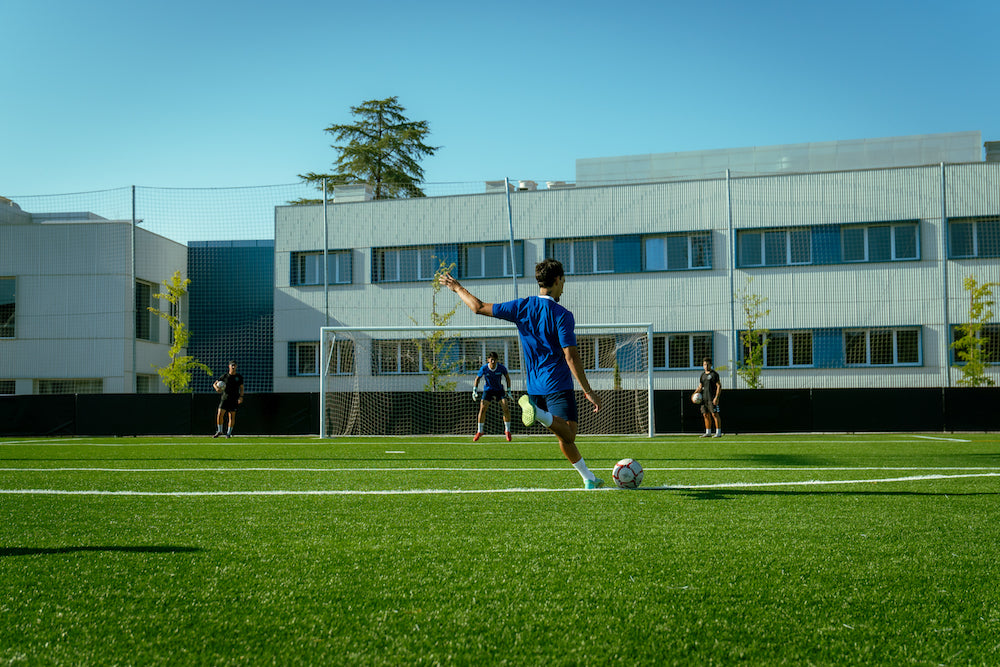


A goalkeeper's development depends on more than making saves. Families should look for coaching that connects reactions, handling, positioning, distribution, and ball security to the decisions a player must make during a match. The right option also needs to fit the player's current needs, preferred learning environment, and the family's practical questions about format, location, schedule, and cost.
Contact GFI Academy to compare current goalkeeper training options and ask about fit and availability.
For families comparing goalkeeper training houston options, start by asking whether instruction is specialized, individualized, and clear about what each session is designed to improve. GFI Academy lists European-style technical and tactical coaching tailored to an athlete's strengths and weaknesses, with individual and small-group formats available. Confirm current availability and fit before enrolling.
This guide explains how goalkeeper work differs from outfield development, what to ask about coaching quality, and how to compare session formats without treating price as the only measure of value. First, consider why the position requires its own development lens.
What Makes Goalkeeper Training Different from Outfield Player Development?
Goalkeeper training is different because the position demands its own technical actions, decisions, and movement patterns. A goalkeeper must read the play, organize space, stop shots, secure the ball, and begin attacks with distribution. Those demands require focused practice in addition to the broader technical and tactical work shared by every soccer player.
Outfield development often emphasizes receiving under pressure, passing, dribbling, combination play, defending, and movement away from the goal. Goalkeeper development adds shot-stopping and reaction, positioning, handling, ball security, and distribution. The skills connect, but the coaching questions are different: Is the goalkeeper set before the shot? Is the starting position appropriate? Can the player hold or safely redirect the ball? Can the next pass help the team retain control? GFI Academy lists these role-specific areas in its dedicated goalkeeper training page.
For parents, the practical answer is simple: a goalkeeper should still develop as a complete soccer player, but specialized sessions give the position's unique skills enough attention. Effective work should connect technique to game decisions rather than isolate movements from the match. GFI's GFI goalkeeper training options are presented as specialty support within a wider player pathway, not as a replacement for broader development.
A parent checklist
- Shot-stopping and reaction: Does practice help the player respond to different types of shots and rebounds?
- Positioning: Does the coach explain how starting position changes with the ball, attackers, and goal?
- Handling and ball security: Does the player learn when to catch, hold, parry, or safely redirect the ball?
- Distribution: Does training connect saves to the next decision, including how the goalkeeper restarts play?
- Individual needs: Is feedback adapted to the player's current strengths and weaknesses rather than copied from a generic drill?
These criteria help families compare a specialized goalkeeper session with general team practice while keeping the focus on long-term development.
Goalkeeper training Houston Families Can Compare with Confidence
Direct answer: Parents should compare goalkeeper programs by asking how clearly coaches assess a player's current strengths and weaknesses, how specific the feedback is, whether sessions develop decisions as well as technique, and how the program communicates next steps. The best fit is not automatically the most intensive option. It is the setting that gives the player useful challenge, understandable coaching, and a development plan the family can support.
Look for feedback that changes the next repetition
Specialized coaching should go beyond telling a goalkeeper to "do better." Ask what the coach observes in a save, distribution choice, starting position, or handling technique. Strong feedback identifies the action, explains why it matters, and gives the player a practical adjustment to try immediately. Parents can also ask how progress is discussed after a session and whether the player receives guidance they can understand and apply in team training.
GFI Academy describes its goalkeeper instruction as European-style and tailored to each athlete's strengths and weaknesses. That makes individualized observation an important point to clarify when comparing providers. You can review the GFI Academy coaching team and ask how a prospective session would address the player's current needs.
Compare the whole decision, not one skill
A goalkeeper's development includes more than shot-stopping. Parents should listen for a balanced approach to positioning, handling, distribution, reaction, and ball security, alongside the ability to read play and make decisions under pressure. GFI's wider methodology combines technical, tactical, cognitive, and physical development. Read about its player-centered goalkeeper development approach, then ask how those areas appear in a typical session.
Finally, compare practical fit: individual attention versus a small-group environment, travel from your area, communication expectations, and whether the player feels challenged without being overwhelmed. Ask what the coach would recommend now, what should wait, and how the family can confirm current availability. A thoughtful answer is often more useful than a broad promise about results.
What Should You Look for in a Youth Goalkeeper Coach in Houston?
Direct answer: Look for a coach who can observe goalkeeper technique closely, explain the reason behind each adjustment, and connect training exercises to decisions a player must make in a match. The best fit is not defined by a list of impressive-sounding claims. It is defined by clear instruction, individualized feedback, and a development plan that respects the player's current needs.
During an introductory conversation, ask how the coach evaluates shot-stopping, handling, positioning, distribution, and ball security. A useful answer should describe what the coach watches, how feedback changes when a player struggles, and how progress is revisited over time. You can also ask how sessions balance repetition with situations that require the goalkeeper to read the play, choose an action, and respond under pressure.
Questions parents can ask before enrolling
- How do you identify a player's strengths and the first technical priorities to address?
- How will the player receive feedback during and after a session?
- How do you connect goalkeeper technique with positioning, distribution, and game decisions?
- How do you adapt instruction when players have different experience levels or learning needs?
- What information should families share about the player's team role, goals, or current challenges?
GFI Academy identifies Eduardo D'Avino as its Director of Goalkeeping and an MLS Next goalkeeper coach. Families can review the documented GFI Academy coaching background and compare it with the questions above, rather than assuming that a coach's title alone guarantees a particular outcome.
It is also worth asking whether the goalkeeper's development is viewed as part of the whole player. GFI describes its broader approach through a GFI player-centered methodology that combines technical, tactical, cognitive, and physical development. That perspective can help families evaluate whether specialized goalkeeper work complements the player's wider soccer pathway instead of operating as an isolated set of drills.
Individual vs. Small-Group Goalkeeper Sessions: Which Fits Your Player?
The right format depends on what your goalkeeper needs next. Individual coaching can create more uninterrupted time for targeted feedback, while a small group can add shared repetitions, movement, and decision-making around other players. Neither option is automatically better. The useful question is whether the session design matches the player's current development priorities.
Listed GFI Academy goalkeeper session options| Format | Listed price | May fit best when... | Tradeoff to consider |
|---|---|---|---|
| Individual | $100 for one session; $350 for four sessions | The player needs focused attention on a specific skill or recurring error. | There is less opportunity to learn alongside other goalkeepers or share realistic group repetitions. |
| Small group of two | $130 per hour | Two players want specialized work with some shared activity. | Feedback time and exercises must accommodate both players. |
| Small group of three | $135 per hour | A player benefits from a compact training environment with more varied repetitions. | Individual correction may be less continuous than in a private session. |
| Small group of four or five | $260 for four; $325 for five per hour | Players are comfortable training together and want a broader group setting. | Each player may receive less direct coaching time during a session. |
These are listed prices from GFI Academy's goalkeeper training page, not a guarantee of current availability. Families should confirm pricing, scheduling, and format before booking. The page lists individual and group sessions on Tuesdays, but that schedule should also be confirmed.
Choose individual work when the priority is diagnosing a technical issue, refining handling or distribution, or building a focused plan around the player's strengths and weaknesses. A group may be more useful when the player needs to respond to varied shots, work on positioning, or practice distribution while adjusting to another goalkeeper's movement. GFI describes group sessions as covering shot-stopping, positioning, and distribution while refining individual skills.
For a closer look at the available formats, review the individual and group goalkeeper sessions. Families considering a more intensive, shared training environment can also review the goalkeeper camp training details. The best choice should reflect the player's goals, comfort in a group, and the kind of feedback they can apply between sessions.
How GFI Academy Develops Technique, Positioning, and Mentality
Specialized goalkeeper work is most useful when it connects to the player's wider development, rather than sitting apart from it. At GFI Academy, the goalkeeper pathway fits within the GFI Players Centric Methodology, which combines technical, tactical, cognitive, and physical development. That broader lens helps families look beyond isolated saves and ask how a player is learning to read the game, move with purpose, and contribute to the team's next action.
Technique is connected to decisions
The goalkeeper-specific focus includes shot-stopping and reaction, distribution, positioning, handling, and ball security. These skills are distinct, but they are not separate from match understanding. Positioning affects the options available during a shot. Handling and ball security influence what happens after a save. Distribution turns recovery of possession into the beginning of an attack. Training can therefore develop clean technique while helping a player understand when and why that technique matters.
GFI describes its goalkeeper instruction as European-style and tailored to each athlete's strengths and weaknesses. For a parent, the practical question is whether coaching can identify the next useful adjustment for a particular player and connect that adjustment to the demands of the position. The goal is not to promise a specific result. It is to create a coherent development process that addresses the player in front of the coach.
A pathway that considers the whole player
The cognitive and physical elements of the methodology add context to technical work. A goalkeeper must process changing information, manage positioning, and respond to actions around the box, while also developing the physical qualities needed to execute those decisions. This is why a player-centered approach can be more useful than treating goalkeeper training as a collection of drills.
GFI Academy identifies goalkeeper service across Greater Houston, including The Woodlands, Grand Oaks, Sugar Land, and Central Houston. Families can review the GFI Players Centric Methodology to understand the wider development model and explore GFI Academy facilities. This competitive soccer program fit guide can also help families consider how specialty work may complement a player's primary pathway.
Pricing, Schedule, and How to Book Goalkeeper Training at GFI
GFI Academy lists individual and group goalkeeper training on Tuesdays, but families should confirm current availability, location, and session details before making plans. The available goalkeeper-training information does not specify age eligibility, so ask the academy whether the session is appropriate for your player's current stage and needs.
Listed pricing provides a useful starting point:
- Individual training is listed at $100 for one session or $350 for a four-session bundle.
- Group training is listed hourly at $130 for two players, $135 for three, $260 for four, or $325 for five players.
These figures are listed rates, not a guarantee of current availability. Confirm the price, session length, participant count, and any booking requirements directly with GFI Academy.
- Review the session formats. Start with the review current goalkeeper training options to compare individual coaching with a small-group setting. Consider whether your player needs concentrated feedback or would benefit from working alongside other goalkeepers.
- Choose the questions that matter. Ask which Tuesday times and locations are currently available, whether the listed rate still applies, and how the coach will tailor work to the player's priorities. You can also ask about the focus on shot-stopping, positioning, distribution, handling, reaction, and ball security.
- Confirm player fit. Because the source does not state goalkeeper-session age eligibility, request confirmation before booking. Share relevant context, such as playing experience, current training goals, and whether the player is seeking individual or group instruction.
- Contact GFI before paying or scheduling. Use the contact GFI Academy page to verify current pricing, Tuesday availability, location, and enrollment steps.
For families considering a more concentrated seasonal option, ask whether the high-performance goalkeeper camp is currently relevant to the player's goals. Confirm that offering separately rather than assuming it is part of regular goalkeeper sessions.
Contact GFI Academy to discuss current goalkeeper training availability and the right next step.
Frequently Asked Questions
What age should a player start goalkeeper training?
There is no single starting age that fits every player. Consider the athlete's interest, confidence, coordination, and readiness to learn position-specific skills. Ask the academy about its current eligibility and pathway before booking. GFI Academy's goalkeeper source does not specify an age range, so families should confirm fit directly rather than rely on a general cutoff.
What is the best way to train a goalkeeper?
The most useful plan combines technical repetition with decisions that resemble the game. Training may address shot-stopping, reactions, handling, positioning, distribution, and ball security, while coaching feedback is adapted to the player's strengths and weaknesses. Individual sessions can target a specific need, while a small group adds realistic interaction and shared practice.
Is individual or group training better for a young goalkeeper?
It depends on the player's current need. Individual coaching can provide concentrated feedback on technique and confidence. Small-group work can add competition, positioning decisions, and distribution under changing conditions. GFI lists individual sessions at $100 or a four-session bundle at $350. Because group hourly prices vary by group size, confirm the current format and availability before enrolling.
How much does goalkeeper training cost at GFI Academy?
GFI lists individual training at $100 for one session or $350 for four sessions. Listed group hourly prices are $130 for two players, $135 for three, $260 for four, and $325 for five. These are published prices and may change, so families should confirm the current total, schedule, and session details with GFI Academy before booking.
Ready to Compare Goalkeeper Training Options?
A conversation can help your family compare current goalkeeper training options, ask practical questions about fit and availability, and identify the next enrollment step for your player. Contact GFI Academy to discuss what you are looking for and get guidance on the best way to move forward.