

For Houston families, choosing a youth soccer program is about more than finding the nearest field. The right environment should help a player build skill, understand the game, handle challenges, and grow with confidence.
The gfi players centric methodology youth soccer framework is GFI Academy's European-influenced approach to developing the whole player through technical, tactical, cognitive, and physical development. It also keeps the player's personal growth in view, supporting development as both a footballer and a person.
That distinction matters because player-centered development is not a promise that every athlete follows the same route or reaches the same level. It is a way to connect coaching, challenge, and care to the individual while giving families a clearer foundation for evaluating fit. Here is what the approach means and how it can shape a player's experience across Greater Houston.
How Does the GFI Players Centric Methodology Shape Youth Soccer?
The GFI Players Centric Methodology is GFI Academy's European-influenced framework for developing young soccer players as complete individuals. It brings technical, tactical, cognitive, and physical development into one connected approach, with the aim of maximizing each player's individual potential. The model is comprehensive, but it is not a promise of a particular team, scholarship, contract, or competitive outcome.
That distinction matters for families evaluating youth soccer. A player-centered methodology does not treat every athlete as if they have the same needs, strengths, timeline, or goals. Instead, it gives coaches a structure for identifying individual talent while helping players build the skills and understanding required to participate effectively within a team. The work includes learning how to execute techniques, recognize tactical situations, think through pressure, and care for the physical demands of training and competition.
GFI also defines development beyond performance on the field. Its stated focus is the growth of the individual as both a football player and a person. That means athletic progress is considered alongside qualities such as confidence, emotional control, discipline, and responsibility. The framework supports long-term growth without implying that every player will follow the same route or reach the highest level.
GFI describes a pathway that extends from Jr. Academy to MLS NEXT teams. This shows the range of environments available within the academy, not a guaranteed destination for every athlete. A player's appropriate next step depends on age, readiness, fit, effort, and ongoing development. Families can review the official GFI methodology for the academy's full explanation of this player-centered framework.
How Does European Influence Apply to Houston Youth Soccer Development?
European influence is best understood as a training philosophy, not a single European way to play. For a Houston family, the practical question is whether coaching helps a player develop technical ability, tactical understanding, physical readiness, decision-making, and personal confidence in an age-appropriate setting.
GFI applies that philosophy across its Greater Houston footprint, including The Woodlands, Grand Oaks, Central Houston, and Sugar Land. The academy offers a pathway from Recreation to Competitive and High Performance programs, so a player's experience can match current ability, goals, readiness, and family needs. That does not mean every player follows the same route or reaches the same level. It means families can evaluate development as an ongoing process rather than treating one tryout or one season as a final judgment.
What this can look like for Houston families
Parents can ask how a program balances challenge with success. They can also ask how coaches help players understand the game, rather than only preparing them to win the next match. A developmentally appropriate team fit may give a young player meaningful challenges without placing them in an environment where they cannot contribute or build confidence.
This approach also respects the reality that young athletes mature at different rates. Youth-soccer research notes that training load, injury risk, and physical performance considerations mean one size does not fit all. Families should therefore ask how coaches observe growth, adjust expectations, and communicate about workload and recovery.
In practical terms, the official GFI methodology connects soccer development with the development of the person. The goal is a clear, supportive framework for progress, not a guarantee of college placement, professional selection, or any individual outcome.
The Five Development Dimensions in GFI Youth Soccer Training
GFI's training model connects five dimensions so players can develop skills, understanding, physical readiness, decision-making, and character together. Each dimension can look different as a player grows, but the goal is a complete development experience rather than isolated drills or game results.
Technical development
Technical work builds the player's relationship with the ball. GFI identifies technical, analytical, and integrated training as parts of its approach. In practice, that can mean improving control, passing, receiving, dribbling, and finishing, then applying those abilities in game-like situations. The emphasis is not only on performing a movement correctly, but on making the skill useful under pressure and in changing match conditions.
Tactical development
Tactical training helps players understand how the game is organized and when to apply its principles. GFI describes this work as focused on game formation and appropriate timing. A developing player may learn how to create space, support a teammate, recognize defensive organization, or choose when to advance and when to retain possession. These concepts help players connect individual actions to the needs of the team.
Physical development
Physical development includes conditioning on and off the field. GFI also states that it monitors players' physical evolution and provides guidance about nutrition, exercise, and rest. That broader view matters in youth soccer because players mature at different rates. Training should support a player's current needs and long-term health, rather than treating every athlete as if the same workload fits everyone.
Cognitive development
Soccer requires players to notice information, interpret it, and act while the situation changes. GFI teaches players to read the game, manage pressure, and control their emotions. A player may show cognitive growth by scanning before receiving the ball, anticipating a teammate's movement, responding to a defensive transition, or staying composed after a mistake. These habits support better decisions without promising identical outcomes for every player.
Personal development
GFI's model includes emotional, social, and leadership training because development extends beyond the footballer. Players can build communication, responsibility, resilience, and respect while learning to contribute to a group. The Players of Life program reinforces this whole-person focus through leadership, social responsibility, education, and soccer development. Together, these dimensions give families a clearer way to evaluate whether a program is developing both the player and the person.
Related products


What Does Player-Centered Coaching Look Like on the Field?
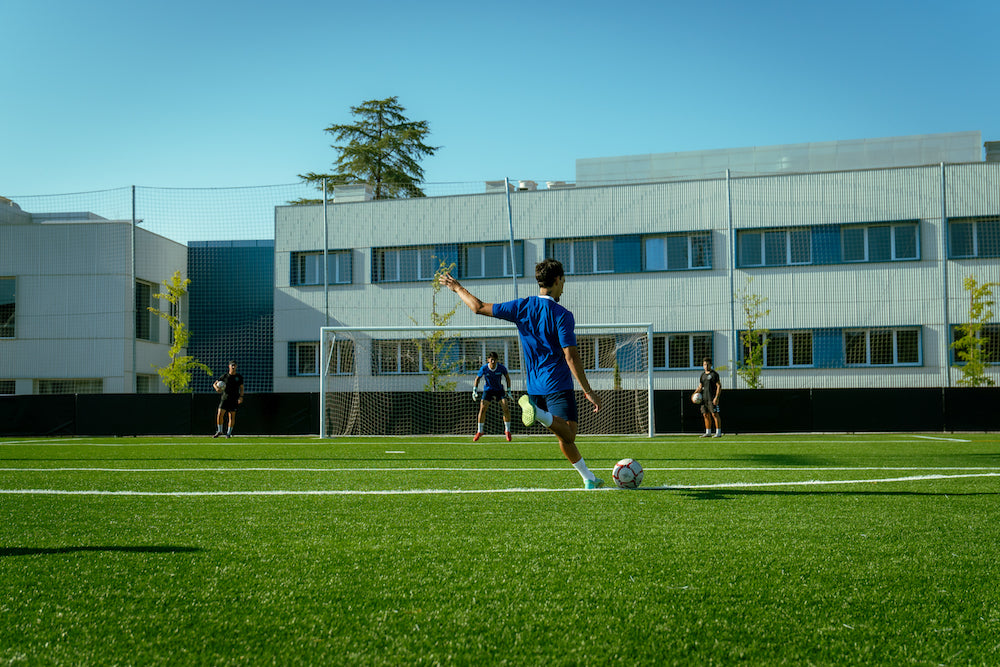
Player-centered coaching is visible in the decisions players are asked to make, not only in the drills they complete. GFI describes a game system adapted to the player and game concepts adapted to the team. That means the coach can preserve shared principles while helping players understand how their strengths, role, and current level fit the situation.
The practice environment still carries game-like intensity. Players work toward tactical understanding, then apply it at the appropriate moment rather than repeating movements without context. In GFI's model, attacking decisions may respond to the spaces an opponent leaves open, including when to make a deep run. Defensively, players learn to organize compactly, recover possession, and apply pressure after losing the ball. Situational interpretation connects those moments: the best choice changes with the score, space, pressure, teammates, and opponents.
- Players solve problems. Watch for questions, constraints, or small-sided situations that require a player to scan, choose, and act instead of waiting for one predetermined answer.
- The team adapts without losing structure. Players should recognize when to attack an available space, support a teammate, protect a dangerous area, or keep possession while maintaining the team's shared principles.
- Transitions have purpose. After possession changes, look for immediate decisions: pressure the ball, recover shape, offer support, or move into space. The response should reflect the moment rather than follow a rigid script.
- Feedback is individual and actionable. A coach may adjust a player's positioning, timing, or risk-taking based on that player's needs while continuing to develop the team model.
This individualized lens also matters physically. A peer-reviewed youth soccer review explains why maturity, training load, injury risk, and physical performance require more than a one-size-fits-all approach (peer-reviewed review of maturity considerations in youth soccer). Player-centered coaching does not remove challenge. It makes the challenge more purposeful, age-aware, and connected to the player's next step. Families can read more about the approach in the official GFI methodology.
How Is This Different From a Traditional Club Soccer Experience?
There is no single traditional club model, and families should evaluate the actual coaching environment rather than rely on labels. The useful question is whether a program's daily decisions match the player's current needs and long-term goals.
With the GFI Players Centric Methodology, the stated aim is to develop each player as both a footballer and a person. GFI describes a framework that combines individual talent development, game-like intensity, tactical understanding, and physical care. That can give parents a clearer basis for comparing programs: ask how coaches track development, teach players to understand decisions, and adjust challenge as the player grows.
Game results still matter as part of competition, but they are not the only measure of progress. GFI's approach emphasizes technical, tactical, cognitive, and physical development, while also including emotional, social, and leadership training. The Players of Life program extends that whole-person focus to leadership, education, social responsibility, and soccer development.
| Development question | What families can look for |
|---|---|
| Individual growth | Coaches identify a player's strengths and current priorities. |
| Game understanding | Training connects technique with decisions, space, and team principles. |
| Whole-person support | The program includes emotional, social, leadership, and physical development. |
| Pathway fit | The next challenge matches the player's age, readiness, goals, and needs. |
Questions families can ask when comparing programs
- Individual development: Will the coach identify a player's strengths and current priorities, or is every player expected to follow the same development route?
- Game understanding: Does training help players read situations and apply tactical principles, not just repeat isolated techniques?
- Whole-person support: Does the program make room for emotional control, leadership, education, and healthy physical development?
- Pathway fit: Can the program meet a recreational player's needs today while offering appropriate competitive or high-performance options later?
For more context on evaluating coaching, commitment, competition, and player fit, read this parent guide to competitive youth soccer. The best choice is the environment that fits your child's age, readiness, motivation, and family priorities, without promising that every player will follow the same path.
How Do International Partnerships Support the GFI Pathway?
International partnerships can give a youth soccer pathway broader perspective. GFI Academy documents partnerships with Chivas Guadalajara in Mexico and C.F. Fuenlabrada in Spain. These relationships fit within a development model that encourages players and families to understand soccer beyond a single local competition environment.
For families exploring the GFI competitive player development pathway, the value is not a promise of travel, selection, or a particular playing outcome. Rather, international relationships can add context to how players train, think about the game, and see different football cultures. They may also reinforce the importance of technical, tactical, cognitive, and personal development over a narrow focus on short-term results.
GFI's knowledge base documents players training with C.F. Fuenlabrada, but that should not be read as an opportunity provided to every player. Participation, program fit, age, readiness, and current availability all matter. An international partnership is best understood as part of the academy's broader pathway perspective, not as a guaranteed destination or recruiting result.
Families should ask practical questions before choosing a program: Which pathway fits the player's current development needs? How does the coaching approach support growth over time? What opportunities are currently available for this age group and program? To discuss fit, current offerings, or the next step, contact GFI Academy directly and verify the details for your player.
Frequently Asked Questions
What is a player-centered approach to coaching?
A player-centered approach adapts development to the individual rather than treating every player identically. At GFI, the game system is adapted to the player, while game concepts are adapted to the team. The goal is to identify and promote each player's talents while developing the player as both a footballer and a person. See the official GFI methodology for the full framework.
What are the four pillars of soccer development?
GFI identifies four core development areas: technical, tactical, cognitive, and physical. Technical work builds execution, tactical work develops understanding of formations and game principles. Cognitive work supports reading the game and managing pressure, and physical work addresses conditioning and ongoing physical development. GFI also includes emotional, social, and leadership development, so its framework extends beyond four areas.
How does GFI support a player's physical development?
Physical development includes conditioning on and off the field, along with attention to how a player eats, exercises, and rests. GFI says it monitors each player's physical evolution and provides guidance in these areas. That individual focus matters because youth players do not mature at the same rate, and training load and injury considerations should not follow a one-size-fits-all model.
Does the methodology focus only on winning?
No. GFI describes its focus as maximizing each player's individual potential and developing the whole person. Players work on technical and tactical abilities, decision-making, emotional control, leadership, and social growth. The pathway includes Recreation, Competitive, and High Performance options, but families should view those programs as development opportunities, not guarantees of selection, college placement, or professional outcomes.
Ready to Find the Right Next Step for Your Player?
Every player's development path can look different. A conversation with GFI Academy can help your family explore the best next step for your player. Options may include Recreation, Competitive, High Performance, a free clinic, a no-fee tryout, or PlayMetrics registration. Contact GFI Academy to discuss your options with the team.