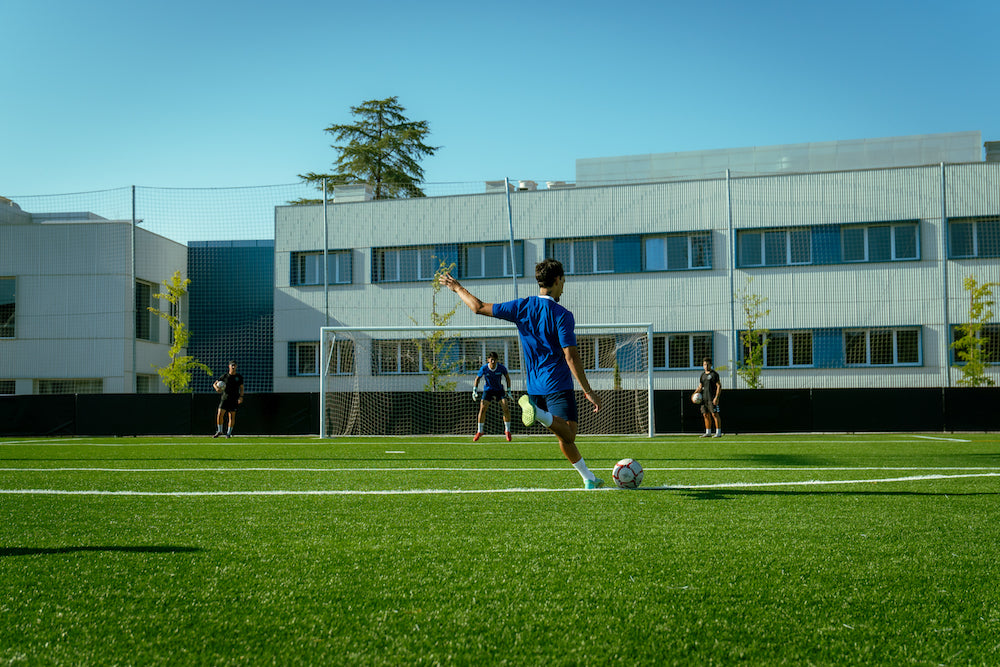


The youth soccer evaluation process can feel like a big moment, especially when your child is choosing a first team or considering a more competitive setting. In practice, an evaluation is best treated as a two-way conversation: coaches get a look at how a player approaches the game, and families learn whether the program, expectations, and environment fit their child. Here is how to prepare, what to observe, and what to ask in Greater Houston.
Ask GFI Academy about the right next step
What is a youth soccer evaluation?
A youth soccer evaluation is an opportunity to understand a player's current experience and identify an appropriate next step. The word “evaluation” can mean different things from one club or program to another. It might be a tryout, a training session with coaches observing, a placement conversation, or a combination. Do not assume every club uses the same format or scores players in the same way.
The purpose should be broader than deciding who is the fastest or who scores the most goals in a short session. For a young player, coaches may want to see how the child listens, tries unfamiliar tasks, moves with and without the ball, interacts with teammates, and responds when an activity changes. These are observations in a specific setting, not a complete measure of potential.
Families can evaluate the program, too. Notice whether instructions are clear, players get meaningful chances to participate, and the environment encourages effort and learning. Ask how the club communicates placement decisions and what families should do next. Some clubs share player evaluation forms; for example, Natick Soccer describes evaluation forms for players and goalkeepers. That is an example of one club's process, not a universal standard.
How should families prepare before an evaluation?
Preparation should help your child arrive comfortable and ready to participate. It does not need to become a special training plan or a speech about impressing coaches. A calm, familiar routine is usually more useful than last-minute pressure.
- Confirm the details. Ask what the session includes, how long it lasts, where to arrive, what equipment is needed, and whether parents should stay nearby. Confirm whether it is a tryout, an open training session, or another kind of assessment.
- Share useful context. Tell the club your child's age, playing experience, current team or program if applicable, and any questions that could help coaches understand the player. Be straightforward about how often your child has played.
- Bring ordinary gear. Follow the organizer's instructions for footwear, shin guards, water, and ball. If something is unclear, ask rather than guessing.
- Set a process goal. Encourage your child to listen, try each activity, communicate, and enjoy playing. Avoid promising a particular team outcome.
- Leave room for nerves. It is normal for a player to need time to settle in. A first few minutes do not tell the whole story.
For families still exploring the game, ask whether a free clinic is an appropriate place to begin. A clinic and a tryout may have different purposes, so confirm which one best fits your child's experience and the current program opportunity. GFI Academy serves Greater Houston families across The Woodlands, Grand Oaks, Central Houston, and Sugar Land; its locations page can help you consider practical travel and training locations.
What might coaches observe during a session?
The exact activities depend on the program and session. In many youth settings, a coach can learn more from several kinds of moments than from a single goal or mistake. A player may be asked to dribble, pass, receive, move into space, make a decision, or play a small-sided game. Families should ask the club what its own evaluation includes rather than treating this list as a guaranteed format.
- Ball comfort: Does the player try to control and move the ball, and can they attempt a pass or change direction when appropriate?
- Awareness and decisions: Does the player look around, notice teammates or open space, and try to make a choice?
- Movement and effort: Does the player stay engaged, adjust position, and keep working through a challenging activity?
- Response to coaching: Can the player listen to a simple cue and attempt to apply it?
- Team interaction: Does the player communicate, share the ball, and participate respectfully with others?
These are not a checklist parents need to rehearse with a child. A coach sees only a short sample, and a player may be affected by age, experience, unfamiliar surroundings, or nerves. Ask how coaches interpret what they observe and whether there is an opportunity to discuss the player's experience and development goals afterward.
It can help to remember that children do not all develop at the same pace. A player who is still learning to control the ball may show curiosity, persistence, or awareness that is also worth noticing. Another child may have strong technical habits but need time to feel comfortable speaking up in a new group. Rather than trying to rank children against one another from the sideline, pay attention to whether the activities give your player a chance to learn and respond.
Parents can keep a few observations in mind without turning the session into a scorecard: Did your child understand the instructions? Were they involved often enough to show what they can do? Did the coach offer a cue the player could act on? Did the player recover after a mistake and keep participating? These questions help frame a follow-up conversation. They are not a substitute for the coach's perspective or a formal placement decision.
How do you compare program types?
Start with your child's current needs, not with the most advanced label. GFI Academy offers a development pathway that includes Recreation, Competitive, and High Performance soccer. The right question is not simply which program sounds most ambitious. It is which setting makes sense for the child's age, experience, interests, schedule, and readiness for its expectations.
| Program context | Verified age range or stage | What families should clarify |
|---|---|---|
| Recreation | Birth years 2010–2021 for the relevant GFI offering | Ask about the current season, location-specific registration, session format, and ways a newer player can get started. |
| Competitive | Ages 6–18 | Ask how the team environment, training expectations, and placement decision match the player's experience and goals. |
| High Performance | Ages 11–20 | Ask about the specific program or league, time commitment, development priorities, and the next step for a prospective player. |
Age ranges alone do not determine placement or guarantee that a particular team is available. Program formats, seasonal openings, and evaluation arrangements can vary. Use GFI Academy's program overview to understand the broad options, then confirm details directly.
If you are comparing a recreational start with a more structured competitive environment, look at the actual demands on the family as well as the player's interest. For Recreation, GFI lists seasonal enrollment and Saturday games; its Recreation program page is a place to check the current offering. Competitive soccer is for ages 6–18, and the Competitive program information can help families understand that pathway. For High Performance, ask which specific league and opportunity applies; the tryouts page is a useful route for checking current prospect information.
What questions should parents ask the club?
A few clear questions can turn an evaluation into a useful decision point. You do not need to cover everything at once. Choose what matters most to your family and ask for specific answers.
- What is the purpose of this session: development feedback, team placement, or selection?
- What age group and program is the player being considered for?
- What qualities are coaches looking for at this age and experience level?
- Will the player receive feedback? If so, when and how?
- What happens if the child is not placed in the first-choice group?
- What are the training schedule, location, and family time commitments for the relevant program?
- How does the program help players develop beyond match results?
- What are the current fees, required equipment, payment options, and uniform arrangements?
- How should a family proceed if the child is new to organized soccer or needs more time to decide?
GFI's approach is centered on developing technical, tactical, physical, cognitive, and personal qualities. Its methodology page explains the player-centered philosophy. Families can also ask how the Players of Life program connects soccer development with leadership, education, and social responsibility for competitive players.
How can you tell whether the environment fits?
Watch the whole session, not just the moments when your child has the ball. A good fit is about the relationship between the player's needs and the program's expectations. It is not a promise that every session will be easy or that your child will always be selected for a particular role.
Consider these practical signs:
- Your child can participate: Activities give players chances to make decisions and practice, not just wait in line.
- Coaching is understandable: Instructions are appropriate to the age group, and corrections help players know what to try next.
- The values match your family: The club's communication and behavior expectations align with what you want your child to learn.
- The commitment is realistic: Training locations, schedules, travel, and costs fit the family before you make a seasonal decision.
- Your child has a voice: The player can share what felt enjoyable, challenging, or uncomfortable, and adults take that response seriously.
A child's reaction matters, but one session is only one piece of information. Talk together after a break. Ask what the player liked, what felt difficult, and whether they want to learn more. Parents can then compare those answers with coach feedback and the practical details of the program.
What happens after the evaluation?
Before leaving, ask when and how the club will follow up. Clarify whether the next step is another session, a placement conversation, registration, or simply time to consider the options. Avoid assuming that participation in an evaluation guarantees a particular placement or that a quiet response means the player did poorly.
When a decision arrives, ask for concrete feedback that relates to the program being considered. Useful feedback can explain a player's current strengths, areas to work on, and what opportunity may be appropriate now. If the recommendation is not what the family expected, ask respectful questions and consider whether the offered path still supports the player's goals.
Afterward, give your child space to describe the experience before offering your own review. Ask what activity they enjoyed, when they felt unsure, and whether they would like to return. This keeps the conversation centered on the player instead of making the evaluation feel like a pass-or-fail result. If the child wants to continue, agree on a manageable next step, such as getting more information or attending the recommended session.
Families should also make a practical decision separately from the emotional one. Confirm any registration deadline, schedule, travel expectations, and costs directly with the club. Check whether the player is being invited to a specific program or whether additional information is still needed. A clear understanding of the offer helps avoid committing based on an assumption about team placement or future opportunity.
For GFI Academy program questions, the about page provides more context on the club, and families can use the contact page to ask about the right current opportunity. When a specific program is a fit, confirm registration steps and seasonal details before making plans.
Frequently asked questions
Does a youth soccer evaluation decide a player's long-term potential?
No single session can establish a player's long-term potential. It offers a limited view of a child in one setting. Development, confidence, experience, and interests change over time, so ask what the evaluation can and cannot tell you.
Should my child practice special drills before an evaluation?
There is no need to cram. Normal play and a good night's rest are more helpful than adding pressure with unfamiliar drills. Follow the session instructions and help your child arrive ready to participate.
What if my child is new to soccer?
Be honest about their experience and ask whether a clinic, Recreation, or another current entry point makes sense. A newer player should not have to pretend to know the game. The appropriate starting point depends on age, interest, and the club's current opportunities.
Can parents ask for feedback?
Yes. Ask the club how feedback is provided and what the coach observed. Focus on specific, useful guidance rather than a guarantee of selection or future outcomes.
Contact GFI Academy to discuss program fit
Choose a next step that supports development
A youth soccer evaluation is most useful when it helps a family understand both the player and the program. Prepare calmly, observe how the environment works, and ask direct questions about fit, expectations, and follow-up. A thoughtful next step can support growth on the field and beyond it.
Take time to compare the information with your child's interests and your family's schedule before deciding what comes next.