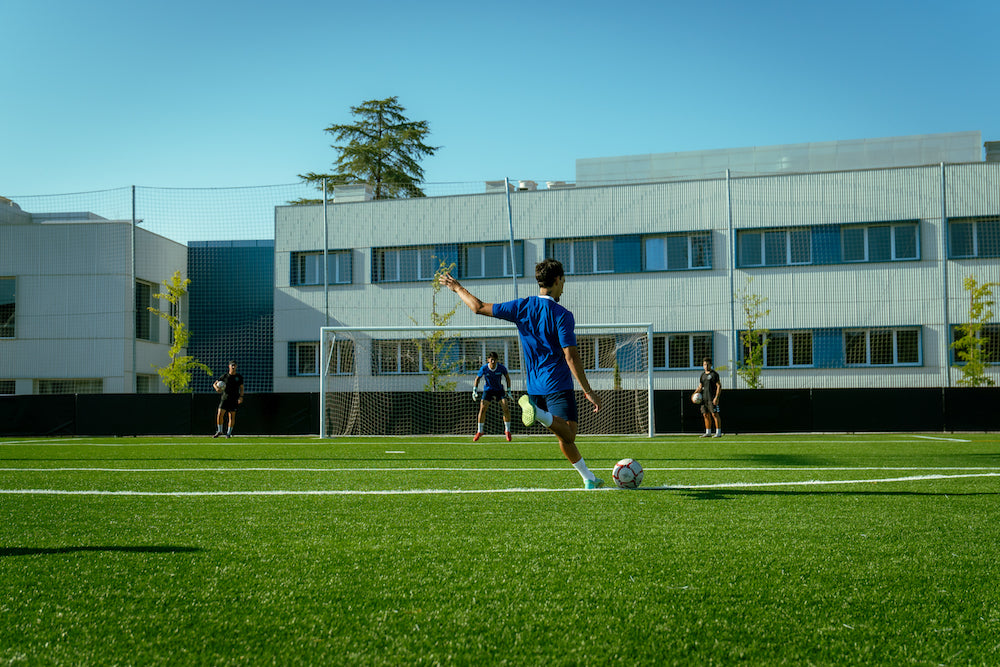


Searching for a soccer academy near me can bring up clubs with very different goals, schedules and levels of commitment. The best choice is not simply the closest field or the biggest team name. It is a setting where your child can learn, enjoy the game and take a next step that fits your family. In Greater Houston, GFI Academy serves players from recreation through competitive and high-performance soccer, with training locations in The Woodlands, Grand Oaks, Central Houston and Sugar Land.
Ask GFI Academy about the right program
What should families look for in a soccer academy near me?
Start with your child’s current needs, not a label. Some players want a welcoming introduction and a chance to enjoy soccer with friends. Others are ready for regular competition, more structured development or a demanding high-performance environment. A useful academy can explain what each stage involves and how a player may progress over time.
Look for a program that can describe its approach in concrete terms. Ask how coaches work on technical skills such as receiving and passing, how players learn to read the game, and how training supports physical, cognitive and personal development. At GFI Academy, the GFI Players Centric Methodology is a player-centered approach that develops technical, tactical, physical, cognitive and personal qualities. Its Players of Life program also connects player development with character, education and social responsibility.
Also confirm the practical fit. A strong program on paper may be difficult if the commute, training days or season commitment do not work for your household. Compare the actual training location, game arrangements, age eligibility, registration process and expected time commitment before deciding.
How do you match a program to your player?
Think about what your player enjoys now, what they want to improve and how much soccer they want in their week. One conversation can help clarify whether an introductory, competitive or high-performance environment is appropriate. The right choice should challenge a player without treating every child as if they have the same goals.
| Program level | Typical fit | What to explore |
|---|---|---|
| Recreation | Players looking for an accessible, fun-focused start | Age eligibility, local training site, seasonal schedule and registration |
| Competitive | Players ready for structured development and league competition | Team evaluation, weekly commitment, league play and development expectations |
| High Performance | Older or ambitious players seeking an advanced competitive setting | Appropriate team pathway, training demands, league affiliation and long-term goals |
GFI Academy’s Recreation program serves ages 4–14. Competitive serves ages 6–18, while High Performance ranges from ages 11–20, depending on the program and fit. Those ranges overlap because readiness and team placement are not determined by age alone. Ask the academy about current evaluation steps and available teams rather than assuming that a particular age guarantees a specific placement.
Families can review the Recreation program, Competitive options and program overview to compare the general pathways.
What should you ask about coaching and development?
Ask how coaches help players improve, and how families receive information about progress. A development-minded environment should be able to explain what players are working on and how learning builds across a season, not only how many games a team plays.
- What skills and game understanding are emphasized at this age?
- How does training adapt as a player develops?
- How are individual progress and team expectations communicated?
- What happens if a player’s goals or readiness change?
- How does the program balance competition, learning and enjoyment?
GFI Academy describes a complete pathway from recreational soccer through competitive and high-performance programs. Its documented affiliations include MLS Next, DPL, GA Aspire and Texas Next. These names describe particular competitive structures; they do not by themselves establish that every player or team participates in them. Ask which option applies to the team being discussed and what that means for your child’s day-to-day experience.
Families considering girls’ development can learn more about GA Aspire at GFI Academy. For a broader look at the club’s development approach, see its methodology and game model.
How can you compare time, location and cost?
Build a realistic weekly picture before making a commitment. Ask where practices take place, where games are held, how often the schedule changes and how much travel may be involved. GFI Academy’s primary service footprint includes The Woodlands, Grand Oaks, Central Houston and Sugar Land. Use the locations page to identify the area most relevant to your household, then confirm the current details for the team.
Costs also vary by program. GFI Academy lists Recreation at $380 for full seasonal payment or $395 through a payment plan, plus a separate $150 uniform kit. Competitive is $1,950–$2,550 annually, and High Performance is $2,430–$2,890 annually. Uniforms are purchased separately through Soccer Post. Payment plans and financial aid are available, and a 10% family discount applies for three or more players. Ask what is included in the applicable registration and what additional expenses your family should plan for.
When comparing programs, look beyond the headline amount. Consider the length of the season or year, travel, equipment and any additional training your family is considering. Confirm the current schedule, fees and registration terms directly before enrolling. The total time commitment matters as much as the fee: account for the drive to training, the possibility of game-day travel and the impact of practices on school, rest and other activities. Ask whether the schedule differs between seasons, and how much notice families receive when details change. A clear answer helps you judge whether the plan is sustainable for the player, not just manageable for the first few weeks.
What does a healthy pathway look like over time?
A pathway is a sequence of appropriate opportunities, not a promise that every player will reach a particular destination. A child may start with recreational soccer, discover a stronger interest, and later explore competitive play. Another player may prefer a recreational setting throughout. Both can be valuable experiences if the environment fits the player.
For players who want a more demanding setting, families can ask about evaluation, age-group fit and the expectations of a specific team. GFI Academy’s High Performance options include pathways associated with league affiliations such as MLS Next, DPL and GA Aspire. The club also documents international partnerships with Chivas Guadalajara and C.F. Fuenlabrada. Ask what a partnership or league affiliation means in practical terms for the player and team under consideration.
For older players, the tryouts page is a starting point for current opportunities. Families interested in the older-player pre-professional route can also explore the USL2 pathway. Each route has specific eligibility and demands, so discuss current requirements with the academy.
Related products


How should you prepare for a conversation with an academy?
Bring a few practical questions and be open about your player’s interests. You do not need a detailed soccer résumé to ask whether a program could be a good fit. Tell the academy the player’s age, experience, goals and the schedule your family can manage.
- Describe what your child enjoys most about soccer and what they hope to learn.
- Ask which program and age group may be suitable, and what evaluation is involved.
- Confirm training and game locations, schedule expectations and seasonal dates.
- Request a clear explanation of fees, separate uniform costs and payment options.
- Ask how coaches communicate with parents and how players receive feedback.
- Take time to compare the answers against your child’s goals and family routine.
For registration, GFI Academy uses PlayMetrics. Families should confirm that they are selecting the right program and location for the relevant season before completing enrollment. If you have questions about fit or next steps, use the contact page to reach the academy.
It can also help to write down what your child values most before the conversation. A player who wants more time on the ball may prioritize a different environment than one motivated by regular league competition. Parents can share relevant context without deciding the entire pathway in advance: previous experience, comfort with evaluation, preferred learning style and any limits on travel or weekly availability. Ask for specifics about the next step, then give your family time to consider the answer. A thoughtful choice is more useful than rushing toward the most advanced-sounding option.
Before the conversation, separate must-haves from preferences. A family might need practices close to home on certain evenings, while preferring a particular league or training style. This distinction helps turn a broad search into a useful comparison. For example, ask whether the listed location is used for every practice or only some sessions, where weekend games are played, and whether the schedule is available before you commit. Do not assume that a club’s general location page describes every team’s routine.
It is also reasonable to ask what a typical training session looks like. A coach might organize a session around ball mastery, passing under pressure, small-sided play and a game-like activity. Ask how those elements change with age and experience. The aim is not to prescribe a session, but to understand how practice connects to the player’s current needs. If your child is new to organized soccer, you may value patient instruction and confidence-building. A player with several seasons behind them may want clearer feedback on decision-making, position-specific responsibilities or team concepts.
Ask how communication works once the season begins. Parents benefit from knowing where schedule updates appear, whom to contact with a question and how the program handles conflicts or absences. GFI Academy uses PlayMetrics for registration and ongoing parent communication. Confirm the process for your particular program, including whether families should expect updates through that platform and how urgent changes are shared.
When reviewing an evaluation, focus on information you can act on rather than a label alone. Ask what the coaches observed, which skills the player can keep developing and what the suggested next step involves. If a placement is not available or does not seem right, ask whether another program or a later evaluation could make sense. A constructive conversation should help your child understand the opportunity without turning one assessment into a judgment of their long-term potential.
Give your player a voice in the decision, especially if they are old enough to express preferences. Ask what felt enjoyable, what was challenging and whether they can picture attending regularly. A parent may weigh travel and cost more heavily; the player may notice whether they felt encouraged or understood. Combining both perspectives makes it easier to choose a program the family can sustain. After gathering the facts, compare options in writing: program fit, weekly schedule, likely travel, total known fees and questions still unanswered. This simple list can reveal trade-offs that are easy to miss in a quick conversation.
Frequently asked questions
What age can a child start at GFI Academy?
GFI Academy’s Recreation offering is for ages 4–14, and its Competitive program is for ages 6–18. High Performance offerings span ages 11–20, depending on the program. Confirm the age group and current availability for the specific season.
Does the nearest soccer academy have to be the best fit?
Convenient travel matters, but it is only one part of the decision. Compare coaching approach, player goals, schedule, team expectations and total cost alongside location.
Are uniforms included in GFI Academy registration?
No. Uniforms are purchased separately through Soccer Post. For Recreation, the listed uniform kit is a separate $150 cost; families should confirm current requirements for their program.
Can a recreational player move into competitive soccer?
Players may explore a more competitive environment as their interests and readiness develop. Placement depends on the applicable evaluation and team opportunities, so discuss the next step with GFI Academy rather than assuming an automatic move.
What should your family take away?
A good soccer academy choice starts with your child: their goals, enjoyment, development needs and readiness for commitment. Compare the actual program experience, ask clear questions and choose a next step that your family can support. With those answers in hand, Greater Houston families can make a more confident decision about where their player should grow.
Talk with GFI Academy about your player’s next step
Exploring options early gives your family time to find a setting where learning, belonging and ambition can grow together.
To understand how inclusive soccer can be adapted for players with disabilities, families may consult U.S. Youth Soccer’s TOPSoccer program information. Its community-based program uses training and team placement tailored for young athletes with disabilities, illustrating why families should ask a prospective academy about accommodations and the support available to their individual player.