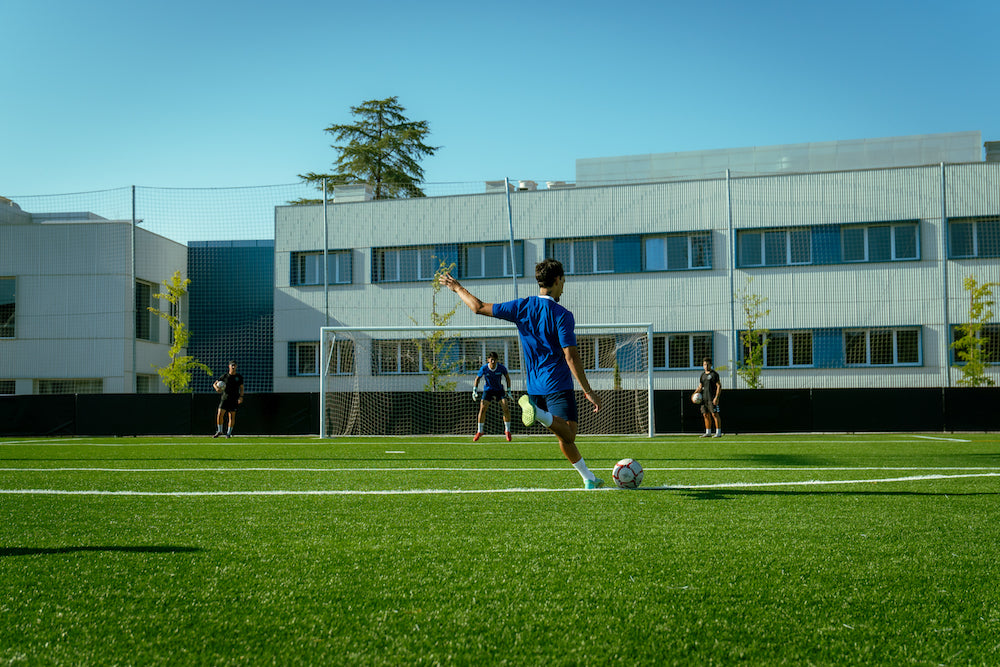


Learning how to balance school and competitive soccer starts with making the week visible, not asking a young athlete to simply try harder. Families can build a plan around school responsibilities, training, travel, rest and time together. If you are exploring a soccer environment that supports development beyond the field, learn about GFI Academy’s Competitive program, or contact the academy with questions.
Talk with GFI Academy about your player’s next step
Why does balance take a plan?
A competitive season adds fixed commitments to an already full week. School hours, assignments, practices, matches, transportation and family obligations all compete for time. The answer is not to fill every open minute. It is to decide what matters, create a workable routine, and adjust when the real week differs from the ideal one.
Parents can help build the structure, but the player should have a voice in it. A teenager who helps choose when to study and what to pack is more likely to understand and follow the routine. The aim is steady participation in both school and soccer, with adequate rest—not a perfect calendar or an assumption that every week will go smoothly.
How can families map out the week?
Start with a short weekly check-in, ideally before the busiest days begin. Put fixed commitments into a shared calendar first. Include classes, practice, matches, travel time and known school deadlines. Then look at the remaining time for meals, homework, sleep, recovery and unstructured breaks.
- List fixed events. Add school hours, training, games and appointments. Include realistic travel and arrival time rather than recording only the event itself.
- Mark deadlines early. Note tests, projects, essays and presentations as soon as they are known. Break larger assignments into smaller sessions across several days.
- Choose study windows. Identify quiet periods that fit the player’s energy and schedule. A short, focused session after school may work better than attempting everything late at night after training.
- Protect sleep and meals. Treat them as basic needs, not leftover calendar space. Do not plan a routine that depends on routinely staying up late to catch up.
- Leave a buffer. A schedule with no room for a delayed ride, extra assignment or tired evening is fragile. Keep some unassigned time where possible.
For example, a match on Saturday may require more than the game block. The family may need to account for travel, preparation and recovery afterward. If a major assignment is due Monday, starting it earlier in the week can prevent a rushed Sunday night. These are planning examples, not fixed rules; each family’s timetable will differ.
Turn a large assignment into manageable steps
Instead of writing “finish science project” on a busy weeknight, divide it into actions that can be completed in realistic blocks: check the rubric, choose a topic, gather sources, make an outline, draft one section, and review the final work. Put those steps on days when the player is likely to have enough time and attention. If a practice runs late, a small first step is easier to move than an entire project. This approach also makes it clear earlier if the plan is not working and the student needs to ask a teacher for clarification.
What should the weekly plan include?
| Area | What to record | Practical planning check |
|---|---|---|
| School | Classes, tests, projects and due dates | Break large tasks into smaller steps before busy match days |
| Soccer | Training, matches, arrival and travel | Confirm schedule changes through the team’s communication channel |
| Recovery | Sleep, meals and downtime | Do not use every open hour for extra work or training |
| Family logistics | Rides, sibling plans and household commitments | Agree who is responsible for each ride or reminder |
| Flex time | Unscheduled time and backup options | Keep a buffer for delays, fatigue or an unexpected school task |
Make the calendar useful at a glance. A simple color for school, another for soccer and a third for personal or family time can reveal a crowded day immediately. Add a note for who is driving and where the player needs to be; avoid making a young athlete remember every detail from a long message thread. At the same time, do not turn the calendar into a minute-by-minute scorecard. It is a shared planning aid, not proof that a player has failed when an unexpected change requires a reset.
How should players communicate with teachers and coaches?
Early, specific communication is more useful than a last-minute explanation. If a match or travel schedule may affect a deadline, the student should ask the teacher about expectations as soon as they know. A parent can help a younger player prepare the message, while allowing the student to practice speaking for themselves.
Keep the note brief and respectful. Explain the relevant schedule conflict, state what work is underway, and ask what the next step should be. Avoid assuming an extension will be granted. The student remains responsible for understanding the class requirements and following up.
For example: “I have an away match on Friday and see that the draft is due Monday. I have started the outline. Could you confirm which parts you expect me to complete before Friday?” This gives the teacher a concrete question and shows the student is taking responsibility. If the teacher says the existing deadline stands, the family can use that information to plan the work rather than discovering the conflict on Sunday evening.
Coaches also need timely information when a school obligation, illness or fatigue affects availability. A player can ask about the schedule and communicate a conflict without making promises they cannot keep. Families can use GFI Academy’s program overview to understand the broad pathway options, and the GFI Players Centric Methodology describes the academy’s player-centered approach to development.
When a conflict comes up, share only the relevant facts: the school event, the time involved and when the player expects to know more. Avoid treating every school demand as an emergency or every training commitment as unmovable. Ask what options exist, then confirm the decision with the adults involved. Regular, calm communication helps a student learn how to manage commitments rather than waiting for a parent to resolve every issue.
How can travel and match days disrupt schoolwork?
Travel time is often the hidden part of a soccer commitment. Before a match or tournament, check the confirmed schedule, expected departure and return, and what the player will need to bring. Do not count on a long ride as guaranteed study time: motion, noise, nerves or limited connectivity can make concentration difficult.
When travel is predictable, identify a small task that can be completed beforehand, such as reviewing notes or outlining a project. Pack materials only if they are useful and practical. For a longer assignment, plan the main work at home in advance rather than expecting the player to finish it between games.
- Confirm match details and transportation plans early.
- Check school deadlines before departure and again after returning.
- Bring only the study materials needed for a realistic task.
- Keep meals, water and rest in the plan; academic work should not crowd out basic recovery.
Families can use a simple travel checklist: confirm the departure location and pickup plan, pack uniform and equipment the night before, identify any deadline due within a day or two of returning, and decide whether a small school task is practical. If the family expects a late arrival, avoid scheduling a demanding study session immediately afterward. A short review may fit; a full assignment may need to be completed earlier. After the trip, check what changed and update the calendar instead of assuming the original plan still applies.
Families can also compare the likely weekly rhythm of different soccer commitments before making a decision. GFI serves Greater Houston families through Recreation, Competitive and High Performance pathways. Details about GFI Academy locations and competitive tryouts can help parents ask practical questions about fit and logistics.
Why should sleep and recovery stay on the calendar?
Sleep is not a reward for finishing every task; it is part of a sustainable routine for a student-athlete. Late practices, homework and travel can squeeze the evening, so examine the whole schedule if the player regularly has too little time to wind down. Avoid solving a recurring time problem by repeatedly pushing bedtime later.
Recovery also includes ordinary pauses between commitments. A full day of school followed by training and a late return may leave little capacity for additional work. Families should notice patterns such as persistent tiredness, irritability, declining focus or a player who no longer enjoys activities that once felt meaningful. These signs do not prove a particular problem, but they are reasons to check in and consider adjustments. Guidance from US Club Soccer on balance for competitive athletes also emphasizes communication and protecting balance.
Ask the young athlete how the schedule feels, rather than relying only on grades, attendance or performance. If tiredness or distress persists, consider speaking with an appropriate health professional. Do not diagnose the cause based on a calendar alone.
Make evenings easier with a repeatable reset
A short routine can reduce the number of decisions a player faces after practice. Prepare the school bag and soccer gear before the busiest day, check the next day’s schedule, and set out what is needed for breakfast or an early departure. Keep the routine modest: it should make the morning calmer, not add another lengthy task to an already late evening. If homework remains, agree on a clear stopping point and decide what needs attention the next day rather than working indefinitely while exhausted.
How can families prevent overload?
Overload often develops gradually: a new commitment is added, recovery time disappears, and the student begins catching up late at night. A regular check-in can reveal the pattern earlier. Ask what feels manageable, what is hardest to protect, and what could be simplified this week.
- Look at the actual week. Compare the planned calendar with what happened, including extra travel, school demands and missed rest.
- Choose a priority for adjustment. It could be an earlier start on a project, a ride arrangement, or a conversation about a schedule conflict.
- Keep the player involved. The young person should help explain what is working and what is not, with adults providing support and boundaries.
- Revisit the fit. If the schedule repeatedly leaves no room for school, sleep or family life, talk with the relevant adults about realistic options.
At the weekly check-in, use specific questions rather than “Can you handle everything?” Ask which day felt most crowded, what task slipped, whether travel took longer than expected, and what one change would make the next week easier. Compare the answers with the calendar. If a player repeatedly studies late after the same training night, try shifting a manageable task earlier in the day or making a different ride arrangement. If the pressure comes from multiple deadlines, help the student contact teachers early to clarify priorities. One small adjustment that addresses the cause is often more useful than adding more reminders.
It can also help to agree on a backup plan for predictable disruptions. If a ride is delayed, who should the player contact? If a match schedule changes, who updates the family calendar? If a school project grows beyond its original estimate, what task can move, and who can help the student ask for guidance? Clear responsibilities reduce avoidable confusion. They also let a young athlete gradually take on more ownership as their age and experience allow.
GFI Academy’s Players of Life program places leadership, education, responsibility and personal growth alongside soccer development. That whole-person perspective is a useful reminder that a player’s progress is broader than match results. Families can explore the Competitive pathway and ask direct questions about program expectations before deciding whether it suits their household.
Frequently asked questions
Should a student study before or after soccer practice?
There is no single schedule for every player. Consider the student’s energy, practice time and next deadline. Some may focus better on a short study block before training; others may need food and a break first. Test a realistic routine and adjust based on how it works.
What if a big assignment is due during a tournament weekend?
Break the assignment into steps and start before the travel weekend. The student can check expectations with the teacher early and ask what to do if the schedule creates a conflict. Do not assume the weekend will provide enough quiet time to complete the work.
How can parents help without managing every detail?
Parents can help set up a shared calendar, arrange transportation and talk through choices. Give the player age-appropriate responsibility for recording deadlines, preparing materials and communicating with teachers or coaches. Review the plan together instead of taking over every task.
When should a family reconsider the schedule?
Revisit it when school responsibilities, sleep, health, family commitments or enjoyment are repeatedly squeezed out. A conversation with the player, school staff and relevant soccer adults can help identify changes. Persistent health concerns should be discussed with a qualified professional.
Ask GFI Academy about program expectations
What should your family take away?
A balanced season is built through realistic planning, early communication and regular check-ins—not by expecting a young person to do more with less rest. Make the week visible, protect room for school and recovery, and adjust when the plan repeatedly fails to fit real life.