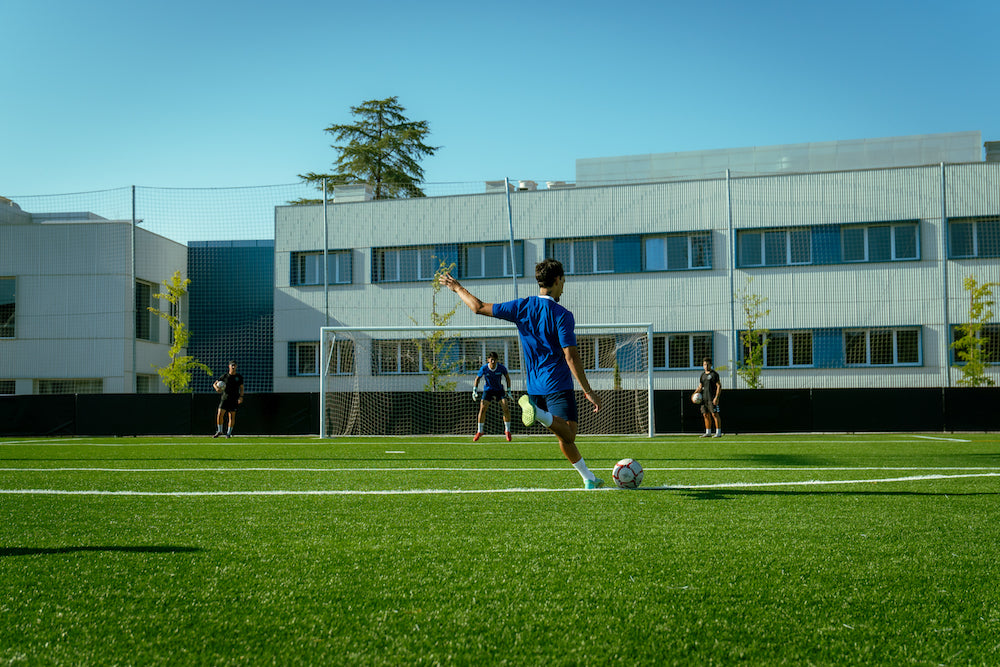


Families searching for the gfi performance center spring texas want more than an address. They want to know what their player may use, how the campus fits into the season, and what to confirm before making the trip. GFI Academy's 20-acre Performance Center is at 27001 Lenze Road in Spring, Texas. Here is a practical look at the facility and how it connects to the academy's programs. Families exploring player development can also review GFI's player-centered methodology as they consider what matters beyond the fields.
Ask GFI Academy about visiting the Performance Center
Where Is the GFI Performance Center Spring Texas Facility Located?
The GFI Performance Center is GFI Academy's main campus in Spring. Its address is 27001 Lenze Road, Spring, TX 77389. The campus covers 20 acres and supports GFI's youth soccer development environment. For families comparing programs, it is useful to understand the center as part of a broader academy rather than as a stand-alone field rental or single team venue.
GFI Academy serves Greater Houston through four primary training locations: The Woodlands/Spring, Grand Oaks, Central Houston, and Sugar Land. A player's regular training site may be a neighborhood location, while games or other activities may take place at the Performance Center. The exact location depends on the program and schedule. Check the current team or program details rather than assuming every weekly session takes place at Lenze Road.
See GFI's locations overview for the wider footprint, and its facility information for more on the campus. Families who are new to the club can also read about GFI Academy before deciding which questions to bring to a conversation. One useful distinction is between a campus address and a team's regular training address: the first tells you where the Performance Center is, while the second is determined by the player's group and current schedule.
What facilities are available on the 20-acre campus?
The documented field inventory at the GFI Performance Center includes three 11v11 turf fields, one 9v9 grass field, and one 7v7 turf field. This mix of field sizes supports different formats of play across the campus. It does not mean that every team trains on every surface; ask which field type a specific program is expected to use.
| Facility feature | Documented details | What families can confirm |
|---|---|---|
| 11v11 fields | Three turf fields | Which field is assigned for a match or session, and whether the schedule uses this campus |
| 9v9 field | One grass field | Whether the player's group uses this format and surface |
| 7v7 field | One turf field | Whether the player's age group or activity uses this field |
| Clubhouse | A 4,500-square-foot clubhouse is listed in GFI's facility profile | Ask which clubhouse spaces are currently open and available for the activity you are attending |
The clubhouse profile describes meeting rooms, a weight room, fitness center, locker rooms, a restaurant, an outdoor picnic area, and a merchandise store. Because completion and operating details can change, families should confirm which spaces are currently open before planning around them. A published facility description is a useful starting point, not a guarantee that every amenity is available during a particular practice or visit.
Large sports campuses can have different combinations of fields and supporting spaces. For comparison only, the City of Round Rock's Athletic Performance Center project description refers to an indoor gym, outdoor track, and multipurpose fields at a separate Texas facility. Those are not GFI amenities; use GFI's own facility information and confirm current access directly when evaluating the Spring campus.
When comparing a facility description with the experience your family needs, separate features into three practical groups. First are the fields: ask which surface and field format your player will use. Second are the spaces supporting the activity: check whether clubhouse areas are open to your group or reserved for another purpose. Third are visit logistics: confirm the arrival point, access expectations, and any event-specific instructions. This keeps a list of amenities from being mistaken for a promise that every space is available to every family at every visit.
How does the Performance Center support Recreation, Competitive, and High Performance?
GFI Academy's development pathway includes Recreation, Competitive, and High Performance programs. The campus is one part of that pathway, providing fields for soccer activity while coaching and the player's age, experience, and program goals shape the training itself. A bigger campus alone does not explain what a player will learn; ask how the team's sessions connect technical, tactical, physical, cognitive, and personal development.
Recreation is an entry point for families looking for a positive introduction to soccer and in-house play. Training locations vary, so ask which location applies to your child and where games are held. GFI's Recreation program page is a helpful place to review the offering. For the season, confirm age eligibility, session location, game location, and registration details before making plans.
Competitive soccer is for players seeking structured development and league and tournament play. The program's verified age range is 6–18, and annual fees range from $1,950 to $2,550. Review the Competitive program details and ask where the team's regular practices and matches will be held. Uniforms are purchased separately through Soccer Post, so they should not be assumed to be included in registration fees. Payment plans and financial aid are available, and the 10% family discount applies to families with three or more players.
High Performance serves players ages 11–20 and includes pathways such as MLS Next, DPL, and GA Aspire. Annual fees range from $2,430 to $2,890. A family exploring this level can review GFI's program overview, then ask how the appropriate team uses the campus and how the season's training plan supports the player's goals. For more detail on the approach, GFI explains its player-centered methodology, which considers technical, tactical, physical, cognitive, and personal qualities.
The Performance Center also sits within GFI's broader commitment to the Players of Life program for competitive players, connecting soccer with leadership, education, and social responsibility. Families comparing specialty development options can explore the professional directors and coaching leadership and ask how a particular player's needs fit with the team's development plan. The aim is to evaluate both the environment and the actual program, not to choose based on acreage alone.
A useful conversation connects the campus to a player's day-to-day experience. Ask what the team works on during a normal session, how coaches communicate development priorities, and how a parent can raise a question about a player's progress. For a player considering a more specialized or advanced pathway, ask which training opportunities are appropriate now and what readiness looks like. The answer should be specific to the player and program; do not treat a facility feature as a promise of a particular outcome or roster opportunity.
Families may also want to compare practical fit. How long is the drive from home to the assigned training site? Is the location different for games? Does the weekly schedule work alongside school and other family commitments? These questions matter even when a campus has several fields. GFI's program overview can help frame the available levels, while a direct conversation can clarify the current team plan. If a player is still exploring, ask whether a free clinic is available as a low-pressure way to experience coaching and the environment before deciding on a season.
It can help to compare program fit and campus fit separately. For program fit, ask about the age group, development priorities, competition format, and what the family hopes the player will gain. For campus fit, ask how often the group is at Lenze Road, whether that applies to practices or games, and how the schedule changes during the season. If you are comparing two pathways, write down the verified fees, separate uniform costs, and travel locations side by side. That makes it easier to weigh the full commitment rather than focusing only on a facility or a single annual fee.
What Does Training at the GFI Performance Center Spring Texas Facility Look Like?
There is no single daily itinerary that applies to every GFI player. Age group, team, season, and scheduled activity all affect where a player reports and what happens during a visit. Rather than assume a specific practice sequence or duration, use the information from the team or program to prepare.
Before the first session or match, use this quick checklist:
- Confirm the date, arrival time, and field assignment.
- Verify whether the activity is at the Performance Center or the player's regular neighborhood training site.
- Check whether the activity is a practice, game, evaluation, or another event.
- Ask what equipment is required, where families should meet, and whether there are location-specific arrival instructions.
- Use the current team schedule rather than an old calendar or a general campus address.
For a first visit, allow time to locate the correct field and get oriented. Bring the items the team has requested, and confirm any questions about parking or access with GFI before setting out. The available facility description identifies fields and clubhouse spaces, but it does not specify current parking arrangements, public access rules, or whether visitors may use every amenity. Those are sensible details to verify, not assumptions to make.
It can help to separate three kinds of information before the visit: the player's practice location, the match venue, and any campus access rules for families. Write down the team's directions and the name of the field or gathering point, then check for schedule updates on the club's normal communication channel. If more than one child in a family plays at GFI, confirm whether their activities are at the same site and whether the times overlap. A quick check in advance helps families plan travel without relying on assumptions based on the campus map or a previous season.
Families can also ask how often the group uses the Performance Center versus other sites. For example, GFI lists Wendtwoods Park in Spring for The Woodlands-area training and the Community Fieldhouse for Grand Oaks training, while the Performance Center is a game location for those groups. Central Houston training and games are listed at Heritage Classical Academy; Sugar Land training is listed at Eldridge Park, with games at Heritage Classical Academy. Schedules can vary, so confirm the current arrangement with the team.
A simple pre-trip routine can prevent avoidable confusion. The evening before, check the latest schedule and note the address for that particular activity. On the day, confirm any field or time change through the team communication channel, then make sure the player has the equipment requested for that session. If the family is visiting to observe or ask about a program rather than attend a scheduled team activity, contact GFI first instead of assuming that an open practice or field is available to visitors.
How can families plan a visit or ask for a tour?
Contact GFI Academy before making a special trip to the campus. The contact team can clarify whether a visit or tour can be arranged, which event or activity is appropriate to observe, and what access is available on the date you have in mind. Do not assume the campus is open for unscheduled walk-throughs or that a regular practice is a formal tour.
When you reach out, share the player's age, current level of experience, program of interest, and the location that is most convenient. You can also ask whether a free clinic or no-fee tryout is the right next step for your family. For competitive and high-performance prospects, ask about tryout opportunities and the evaluation process; for families exploring soccer, ask about an appropriate introductory option. GFI's tryout information and events page can help you prepare questions, while the contact page is the direct route to ask about arrangements.
Before you contact the academy, it may help to write down the questions most relevant to your family. For example: Is this campus used for my child's regular practices, games, or both? Which field should we report to? Can we arrange a visit before registering? Are there access guidelines for family members? What is the best next step for a player at this age and experience level? A concise list helps the conversation stay focused on current, program-specific information.
Contact GFI Academy to confirm visit details
Frequently asked questions
Where is the GFI Performance Center?
It is at 27001 Lenze Road, Spring, TX 77389. Confirm your team's meeting point and field assignment before you travel.
How many fields are at the campus?
GFI's documented inventory includes three 11v11 turf fields, one 9v9 grass field, and one 7v7 turf field.
Does every GFI Academy player train at the Performance Center?
No single location applies to every group. GFI lists several training locations across Greater Houston, and the Performance Center is also a game site for some groups. Check the player's current schedule and program information.
Can families tour the facility?
Ask GFI Academy directly whether a visit or tour can be arranged and what access is available on your preferred date. Do not assume an unscheduled visit is possible.
What should I ask before choosing a program?
Ask about the player's program fit, regular training and game locations, schedule, age eligibility, fees, and what is included. For a campus visit, confirm current access and which facilities your group will use.
The GFI Performance Center provides a substantial Spring campus for academy activities, but the best fit depends on the player and program. Confirm current details with GFI, then consider how the coaching, development approach, schedule, and location work for your family.