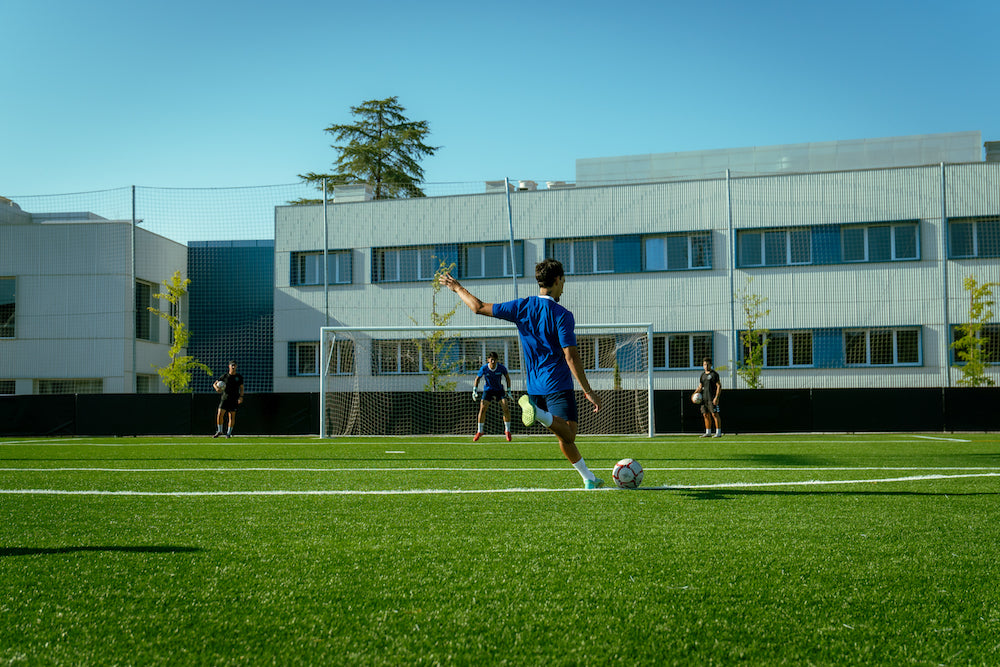


Choosing a summer soccer camp is easier when you start with your child, not the loudest promise on a registration page. Consider age, confidence, skill level, daily rhythm, location, and what your family wants the experience to accomplish. A good camp should feel welcoming while giving players meaningful chances to move, decide, practice, and connect.
Review GFI Academy's current summer camp options for available programs, locations, pricing, and registration details before making a decision.
The best youth soccer camps houston summer options match a player's age and experience with an appropriate training format. Clear supervision, realistic costs, and a development goal that fits the family. Camp can be a positive introduction to soccer or a focused opportunity to build confidence, but it is not an automatic route to team selection or recruitment.
GFI Academy serves families across Greater Houston, including The Woodlands/Spring, Grand Oaks, Sugar Land, and Central Houston/Spring Branch. Families comparing focused training can also explore specialty soccer training options before deciding what kind of summer experience best fits their player. The first question is what concentrated camp training can add beyond the regular season.
What Do Youth Soccer Summer Camps Teach That Regular Season Programs Do Not?
A regular season gives players a valuable rhythm: they return to familiar teammates, build skills over time, and learn how training connects to matches. A summer camp serves a different purpose. Its concentrated format can give a player more opportunities to repeat a movement, test an idea, and receive feedback before the next activity begins. That does not make camp a replacement for seasonal development. It makes camp a useful complement when the format matches the child's needs.
More repetition, more decisions
In a focused camp environment, coaches can revisit a technical theme through several activities rather than waiting for the next weekly session. Players may work on receiving, turning, passing, or finishing, then apply those skills in small-sided games. With fewer players sharing the field, each child can face more moments that require a decision: keep the ball, combine with a teammate, change direction, or defend space. The goal is not simply to perform a drill correctly. It is to understand when and why a soccer action is useful.
That approach aligns with GFI Academy's player-centered methodology, which addresses technical, tactical, physical, cognitive, and personal development. Parents can look for camps that give children room to think and solve problems, not only repeat instructions. A strong experience should challenge a beginner without making the game feel inaccessible, while giving a more experienced player meaningful choices to manage.
Confidence and social growth matter, too
Camp also places players in a new group and a new learning setting. They practice communicating with teammates, adapting to different playing styles, and trying again after a mistake. Those experiences can help a child become more comfortable participating, asking questions, and taking an appropriate risk on the field. The U.S. Physical Activity Guidelines for Americans recommend at least 60 minutes of moderate-to-vigorous activity daily for children and adolescents ages 6 through 17. Active summer programming can be one part of a broader family plan.
For parents comparing options, the best question is not whether camp is better than the regular season. Ask what the child needs next: more touches, more confidence, more decision-making practice, or a positive way to stay active with peers. GFI's specialty soccer training options can provide useful context as you compare formats and choose an experience that supports your player's current stage of development.
What Ages and Skill Levels Are Served by Houston Soccer Camps?
The right camp should match your child's age, experience, confidence, and goals. A beginner may need a welcoming introduction to the ball, while an experienced player may want focused repetition and more challenging decisions. Before registering, ask how players are grouped and whether the activities are adapted for different levels rather than assuming every session serves every player in the same way.
Beginners and recreational players
For a child trying organized soccer for the first time, look for age-appropriate instruction, patient coaching, movement games, and plenty of opportunities to touch the ball. A recreational player can benefit from a camp that builds comfort with dribbling, passing, receiving, and playing with others without making competition the only measure of success. GFI's player-centered approach considers technical, tactical, physical, cognitive, and personal development, which can support a broader view of progress.
Committed and advanced players
Players who already train during the season may be looking for a specific challenge, such as improving first touch, decision-making, finishing, or speed of play. Parents should ask whether the camp offers an appropriate level of intensity and whether advanced players will receive meaningful feedback. Camp participation can complement a longer-term development plan, but it is not an automatic team selection or recruitment route.
GFI's GFI Recreation program describes players born from 2010 through 2021. That range describes the seasonal Recreation offering, not a confirmed camp age limit. For current GFI summer camp options, verify the specific age bands, dates, location availability, daily hours, price, inclusions, and registration link before making plans. This distinction helps families choose confidently without treating a Recreation age range as a promise about every camp.
How Houston Youth Soccer Camps Can Support a Summer Development Plan
A useful summer plan does not need to cover every soccer skill at once. Start by choosing one meaningful focus for your player, such as receiving under pressure, using the weaker foot, changing direction, or making quicker decisions. GFI Academy's player-centered methodology considers technical, tactical, physical, cognitive, and personal development. So a focused camp experience can fit into a broader view of growth rather than becoming a test of how much a player can do in one week.
Choose one focus, then protect the fun
The best focus is specific enough to notice and enjoyable enough to repeat. A younger or newer player might work on comfort with the ball and confidence joining small-sided play. A more experienced player might set a decision-making goal, then look for moments to apply it during games. Keep the language positive and let the player help choose the challenge. Summer training should create enthusiasm for the next session, not turn every activity into an evaluation.
Families can also explore specialty soccer training options when a player wants a more targeted experience. The right choice depends on the player's age, current needs, and interest. So parents should review the specific program details rather than assuming every camp has the same format or purpose.
Match the location to the family routine
Convenience matters because a development plan only works when a family can follow it consistently. GFI Academy serves families across The Woodlands/Spring, Grand Oaks, Sugar Land, and Central Houston/Spring Branch. The GFI Performance Center is a 20-acre facility at 27001 Lenze Road in Spring, Texas. Before registering, compare the available location with travel time, other summer commitments, and the environment in which your player feels most comfortable.
Build in recovery and review
Balance focused practice with rest, unstructured play, hydration, and time away from organized training. After each session, ask what felt challenging, what felt enjoyable, and what the player wants to try next. Families who need help matching a goal to an appropriate option can contact GFI Academy with questions. Verify current camp locations, age bands, dates, pricing, and registration details on the live camp page before making a plan.
What to Expect at a GFI Academy Summer Camp: Format, Schedule, and Daily Training
A well-organized camp gives players a clear rhythm without making every hour feel identical. Before registering, parents should look for a format that balances technical instruction, guided play, hydration and recovery breaks, and age-appropriate supervision. GFI Academy describes a player-centered methodology that develops technical, tactical, physical, cognitive, and personal qualities, so ask how the specific camp applies those priorities in daily activities.
What the daily format should make clear
The current camp page should be the source of truth for dates, age bands, daily hours, location availability, pricing, inclusions, and the registration link. Do not assume that the weekly Recreation schedule, which is a seasonal program format, matches a summer camp day. A useful camp description should explain whether players are grouped by age, experience, or both; how much time is spent on focused skill work; when small-sided games or other coached play occur; and how the day is paced for the players' ages.
- Ask what a typical day includes, such as arrival, warm-up, technical work, tactical activities, games, breaks, and dismissal.
- Confirm who supervises players during arrival, breaks, transitions, and pickup, and whether an authorized-adult release process is required.
- Ask how coaches adjust activities for beginners, returning recreational players, and more experienced athletes.
- Verify the weather plan, including heat, storms, field closures, indoor alternatives, schedule changes, and how families will receive updates.
Location and practical planning
GFI Academy serves families in The Woodlands/Spring, Grand Oaks, Sugar Land, and Central Houston/Spring Branch. The GFI Performance Center is a 20-acre facility at 27001 Lenze Road in Spring, Texas. But parents should confirm the exact site for the camp they select rather than assuming every session is held there. Location affects travel time, what players need to bring, and the pickup plan.
For current format and availability, review the current GFI summer camp options before making arrangements. If the live page leaves a question unanswered, contact GFI Academy at the academy's contact page before completing registration. The goal is not to find a timetable that sounds impressive. It is to choose a safe, well-supervised experience with a realistic daily structure and a development focus that fits your child.
Camp Costs, What Is Included, and How to Register
Cost is only one part of choosing a summer camp. Before registering, compare the training purpose, the player's age and experience, the schedule, what the fee includes, and how much planning your family will need around location and pickup. GFI Academy's reported camp range is $90-$300 across specialized camp types, but families should confirm the current price and camp-specific details on the current GFI summer camp options page.
Questions to answer before choosing a youth soccer camp| Planning area | What to confirm | Why it matters |
|---|---|---|
| Camp purpose | Is the focus introduction, general development, or a specific skill? | The right purpose makes the experience useful and enjoyable. |
| Age and skill fit | Does the listed age band and experience level match your player? | Players learn best when the challenge is appropriate. |
| Schedule and location | What are the dates, daily hours, site, and pickup expectations? | A workable plan helps your child arrive ready to participate. |
| Inclusions | Are training, equipment, meals, or other items included, or separate? | Clear inclusions prevent unexpected costs. |
| Registration | Which link or platform completes enrollment, and are spaces limited? | Using the correct process avoids delays or incomplete registration. |
Do not assume that a Recreation communication tool is also the camp enrollment system. PlayMetrics is verified for GFI Recreation schedule updates and communication, but it is not automatically verified as the registration platform for every camp. Follow the registration instructions attached to the specific camp listing, and confirm the age band, dates, location availability, price, inclusions, and link before submitting payment.
If a detail is unclear, contact GFI Academy at (281) 305-1896. Families still exploring soccer can also review the free youth soccer clinic; its current schedule and availability should be confirmed rather than assumed. A careful check now makes it easier to choose a camp that fits your player's needs and your family's summer plan.
How GFI Summer Camps Connect to Recreation and Competitive Pathways
A summer camp can be a useful first look at how a player responds to coaching, new teammates, and a more focused training environment. It is not, however, the same as enrolling in a seasonal program. GFI Academy offers camps in addition to its regular enrollment options, so families can use the experience to gather information before choosing a longer-term fit.
For a younger or newer player, the GFI Recreation program is the entry point to a consistent seasonal experience. Recreation is designed around foundational development, regular coaching, and an age-appropriate introduction to the game. A camp may help a child decide whether they enjoy structured soccer. But camp attendance does not replace the seasonal registration process or guarantee a place in a team.
Players seeking a more demanding environment can review the Competitive pathway. Competitive enrollment involves its own evaluation, program expectations, and commitment. A family can use camp to identify questions about training frequency, player fit, and next steps, then contact GFI for current information. The academy also documents a High Performance pathway for players pursuing an advanced development setting. That pathway should be considered separately from a camp booking.
What a sensible next step looks like
After camp, ask the player what they enjoyed, where they felt challenged, and whether they want more regular training. Then compare that reflection with the program descriptions, the player's age and experience, and the family's available time. Parents can also read GFI's overview of Greater Houston soccer pathways to understand how the academy describes development across program levels.
Families do not need to decide that a player is "competitive" or "high performance" based on one camp. A conversation with the academy can clarify whether Recreation, Competitive, or High Performance is the most appropriate current option. If a player is interested in a focused area rather than seasonal enrollment, GFI's specialty soccer training options may provide another route to explore.
Most importantly, treat camp as an opportunity to learn, not an audition with a promised outcome. Camp attendance alone should not be treated as a guarantee of team selection or recruitment. Any team placement, evaluation, or enrollment decision should follow the academy's current process and be confirmed directly with GFI. Contact GFI Academy with questions about the next step.
Frequently Asked Questions
What age should a child be before starting a soccer camp?
There is no single best starting age. Choose a camp that matches your child's current age, attention span, comfort level, and experience, then confirm the provider's current age band before registering. A first camp should feel structured but welcoming, with activities that let a new player participate successfully rather than requiring advanced skills.
Are Houston summer soccer camps suitable for beginners?
Many camps can work well for beginners when groups, coaching, and activities are organized for the player's experience level. Ask whether players are grouped by age or ability, how coaches support first-time participants, and whether the program emphasizes learning and confidence as well as competition. A parent should never assume that a camp designed for advanced players is the right fit for a new player.
What should parents ask before registering for a soccer camp?
Confirm the dates, location, daily schedule, age and skill requirements, supervision, what players should bring, what the fee includes, cancellation terms, and the correct registration process. Also ask how the camp balances technical work, small-sided play, breaks, and individual attention. Current details can change, so use the provider's live camp page or contact team rather than relying on an old listing.
Can attending a camp lead to a GFI Academy team?
A camp can help a family explore GFI Academy's approach and learn about separate Recreation, Competitive, and High Performance pathways, but attendance alone should not be treated as a guarantee of team selection or recruitment. Families interested in a longer-term fit should discuss the appropriate next step with GFI Academy and review current pathway information before making enrollment decisions.
Ready to Compare Current Camp Options?
A thoughtful camp choice starts with matching the experience to your player's age, interests, and next development goal. Review the current GFI Academy summer camp options, then contact GFI Academy with questions about age fit, availability, registration, or the right pathway for your family.