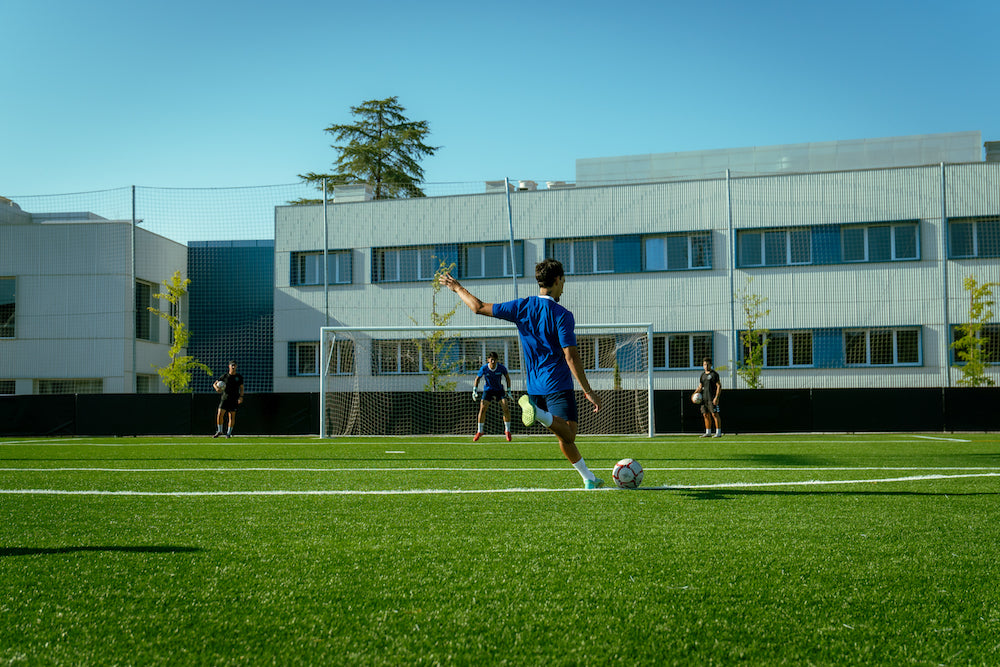


Tryout preparation is most useful when it helps a player arrive rested and ready to play, not master everything at once. Planning around regular practice, basic gear, and event details can make the experience more manageable.
Check current GFI Academy tryout availability and registration
If you are wondering how to prepare for youth soccer tryouts, keep up normal training, rest well, and bring the required equipment. Encourage the player to communicate, work hard, and reset calmly after mistakes. An evaluation can help find a suitable development environment. It does not measure a player's worth or promise selection.
GFI Academy serves Greater Houston families through its competitive soccer program and High Performance pathway. Competitive and high-performance evaluations are no-fee, but availability can change, so confirm details on the GFI tryouts page. Knowing what coaches commonly observe can help players focus on what they can control.
What Are Soccer Evaluators Looking for at Youth Tryouts?
At a youth soccer tryout, coaches commonly look beyond a player's best shot or fastest sprint. They may observe how a player handles the ball, reads the game, responds to instruction, and contributes when the play does not go their way. The specific qualities and their relative importance vary by age, level, team needs, and the evaluation format.
These are common coaching observations, not a published GFI Academy scoring rubric. GFI has not published a formal tryout checklist. So families should not treat any general list as a promise about how a particular player will be assessed or selected.
- First touch and ball control: Can the player receive and move the ball with purpose, including when space or time is limited?
- Decisions and awareness: Do they notice teammates, opponents, and open space, then choose a useful next action?
- Movement and effort: Do they stay involved, offer support, and work to recover possession when the play changes?
- Communication and teamwork: Do they listen, share information, and take part constructively in group activities?
- Coachability and response to mistakes: Can they try an adjustment and rejoin the play after an error instead of dwelling on it?
A player does not need to perform perfectly in every moment. Tryouts can feel unfamiliar, and one mistake does not define a player's ability or potential. Coaches often see more when a young athlete stays engaged, makes the next decision, and treats teammates respectfully than when they focus only on showing off individual skills.
It can also help to understand what kind of development environment a family is considering. GFI Academy describes its player-centered methodology as developing technical, tactical, physical, cognitive, and personal qualities. That broader approach is useful context for parents, but it should not be confused with a list of official tryout scoring criteria.
Before the evaluation, encourage your player to focus on controllable actions: listen to directions, communicate, work hard within their ability, and keep participating after a mistake. The goal is to give evaluators a clear view of how they play and learn. While also helping the family consider whether the team environment feels like a good fit.
How to Prepare for Youth Soccer Tryouts in the Final Week
A useful final-week approach keeps a young player connected to the game without turning tryout preparation into a test of endurance. There is no single schedule every child needs to follow. Keep the routine familiar, make room for recovery, and help your player arrive ready to listen, make decisions, and enjoy competing.
- Stay with regular practice. Continue the player's usual team or individual sessions rather than adding extra hard workouts. Familiar training lets them sharpen habits in a setting they know. If the week is already busy, avoid squeezing in more just because tryouts are approaching. A rested, attentive player is better prepared to take part than one who has spent the week trying to prove fitness.
- Use brief, light technical repetition. When it feels enjoyable, a player can spend a little time with a ball: controlled touches, turns, short passes against a wall, or receiving and moving into space. Keep the focus on comfort and clean execution, not mastering a new move or counting repetitions. Stop while the activity still feels fresh. These touches should complement normal practice, not replace rest or become a demanding extra session.
- Pay attention to the game around the ball. In practice or while watching a match, notice how players scan before receiving, offer a passing option, move after releasing the ball, and communicate with teammates. A young player does not need to memorize a tactical script. Simply thinking about space, support, and the next decision can make it easier to stay engaged when tryout activities change.
- Make everyday recovery part of the plan. Leave time for sleep and downtime, and keep familiar meals and regular water breaks in the routine. There is no need for a special food plan, supplements, or a last-minute conditioning push. Parents can check practical details such as the event time, travel, and what the organizers ask players to bring, so those logistics do not add avoidable stress.
- Prepare mentally with a simple focus. Talk about controllable actions: listen to instructions, work with teammates, try things confidently, and reset after a mistake. A missed pass or imperfect touch is part of playing; dwelling on it can distract from the next opportunity. Parents can offer encouragement without making the outcome feel like a judgment of the child. For families considering GFI Academy's Competitive program, review current program details separately from this general preparation advice.
Keep the days leading up to tryouts flexible around the player's normal routine and how they feel. The goal is not to arrive with a perfect performance rehearsed, but to be prepared to participate, learn, and show their approach to the game.
Related products

What Should Players Bring and Wear to a Tryout?
A simple, familiar setup helps a player focus on the session instead of adjusting uncomfortable gear. Before leaving, check the event instructions and confirm the venue and field surface. Those details can affect which footwear is suitable and where the family needs to go.
- Soccer footwear: Choose footwear appropriate for the confirmed surface, whether the session is on natural grass or artificial turf. If you are unsure what the venue uses, ask the organizer before the event. Players should avoid trying unfamiliar cleats for the first time at a tryout.
- Shin guards: Bring properly fitting shin guards and wear them under the socks. They are standard protective equipment for soccer, but follow any specific instructions provided for the event.
- Water: Pack water in a clearly identifiable bottle so the player can drink during breaks. Check whether the venue has any rules about where bottles may be kept.
- Training clothes: Wear comfortable clothing that allows free movement and suits the weather. Bring an extra layer if conditions call for one. Do not assume a particular uniform, color, or team kit is required unless the organizer says so.
Keep the bag practical. A spare pair of socks can be useful if the first pair gets wet or uncomfortable, but avoid bringing valuables or equipment the player does not normally use. If an organizer has requested additional items, such as a specific ball or check-in information, follow those directions; do not assume extra equipment or documents are required.
Plan to arrive with enough time to find the field and complete any check-in steps described in the event notice. The exact arrival time, venue, surface, and requirements can vary, so confirm them rather than relying on an old message or another family's experience. GFI families should review the current GFI tryout details before setting out, and contact the organizer if any instruction is unclear.
A calm, organized arrival gives the player a moment to settle in, listen to the coaches, and begin ready to participate. Keep the focus on being prepared and comfortable, not on buying special gear for a single evaluation.
What Happens During a GFI Academy No-Fee Evaluation?
For players interested in GFI Academy's Competitive or High Performance programs, the coaching staff conducts no-fee evaluations to consider player placement. The goal is to identify a suitable development level, not to promise a roster spot or enrollment.
GFI does not publish a fixed drill sequence or session length for every evaluation. Do not treat another club's format as GFI's official process. Players can focus on listening, participating fully, communicating, and staying engaged after a mistake. These are sound habits, not a stated GFI scoring rubric.
The evaluation helps the family and coaches consider a suitable development environment. Ask about the team commitment, coaching approach, schedule, and family goals. If the player is offered a place, ask what enrollment requires. If not, ask for feedback or another possible pathway. Do not assume an offer, waitlist, or response timeline is guaranteed.
Event details can change, so check the GFI Academy tryout page for current availability, instructions, and requirements. The page includes a PlayMetrics registration option. Use its current details instead of an old date or eligibility note. Contact GFI if anything is unclear.
Families comparing program fit can also review the GFI Competitive program details. The evaluation is one step in understanding the right development environment for a player. It should give both the coaching staff and family a chance to consider fit, without reducing a player's progress or potential to one session.
What Comes After a Youth Soccer Tryout Evaluation?
After the evaluation, let your player reflect before treating the result as a verdict. One tryout does not define their potential. Ask GFI how and when families will receive an update.
If your player receives an invitation, take time to understand the team and its expectations before deciding. Ask which team or development level is being considered, what the weekly commitment involves, and how coaches support players as they improve. Families can review the GFI competitive soccer program for an overview of the pathway, then confirm current details with the club.
It is also reasonable to ask how the placement recommendation was reached. Questions such as these can turn an uncertain result into useful guidance:
- What qualities or experience made this team a good fit for my child?
- What should my player focus on developing next?
- Would another evaluation or a different pathway be appropriate, and how can we learn more?
If the answer is not a placement, ask whether the coaches can share specific feedback and what options, if any, are available. Do not assume that a waitlist exists; ask GFI whether there is another evaluation opportunity or a suitable alternative for your player. The right next step may be continued development at the current level before trying again.
Parents weighing readiness can compare the feedback with the signs discussed in this guide to competitive soccer readiness. Keep the conversation focused on what your child enjoys, what they are ready to work on, and whether the team environment fits your family's goals. Clear questions help you make a thoughtful decision without rushing the process.
. . . . . . . . . . . . .| Preparation area. | Helpful focus. |
|---|---|
| Ball work | Comfortable touches and simple control |
| Game awareness | Scan, find space, and support teammates |
| Readiness | Follow normal routine and arrive rested |
| Event logistics | Confirm time, venue, gear, and registration details |
Frequently Asked Questions
Should my child train every day before tryouts?
No. Keep normal soccer activities and light ball work if they feel comfortable, but avoid adding exhausting last-minute sessions. A familiar routine, rest, and arriving ready to listen can help a player focus on the evaluation rather than feeling worn out. The CDC recommends varied, age-appropriate, enjoyable activity for young people. Its youth activity guidance supports steady movement, not a sudden tryout-week overload.
What do coaches usually look for at soccer tryouts?
Evaluators commonly observe ball control, passing, movement, decisions, communication, effort, and how a player responds to coaching or a mistake. These are general soccer tryout qualities, not a published GFI scoring rubric. A player does not need to be perfect on every touch to show how they compete and learn.
What should my child bring to a tryout?
Bring soccer footwear suited to the surface, shin guards, socks, water, and weather-appropriate training gear. Check the event instructions before leaving, since they are the best source for location, check-in details, surface information, and any additional requirements.
What should parents do if a player makes a mistake?
Encourage them to move on to the next play rather than replaying the error or comparing themselves with other players. A calm reminder to listen, work hard, and enjoy playing is usually more helpful than adding pressure. After the evaluation, ask what the player learned and what they would like to practice.
How does a GFI Academy competitive evaluation work?
GFI Academy's coaching staff conducts no-fee evaluations for competitive and high-performance player placement. An evaluation is not a guarantee of selection or enrollment. Check the GFI tryouts page for current availability, registration, eligibility, and event instructions, since details can change.
Ready to Explore Competitive Soccer in Greater Houston?
A GFI Academy evaluation gives players an opportunity to be considered for competitive placement, but team placement is not guaranteed. Availability and event details can change, so check the current information before making plans. To review no-fee evaluation availability and register through the verified PlayMetrics option, visit the GFI Academy tryouts page.