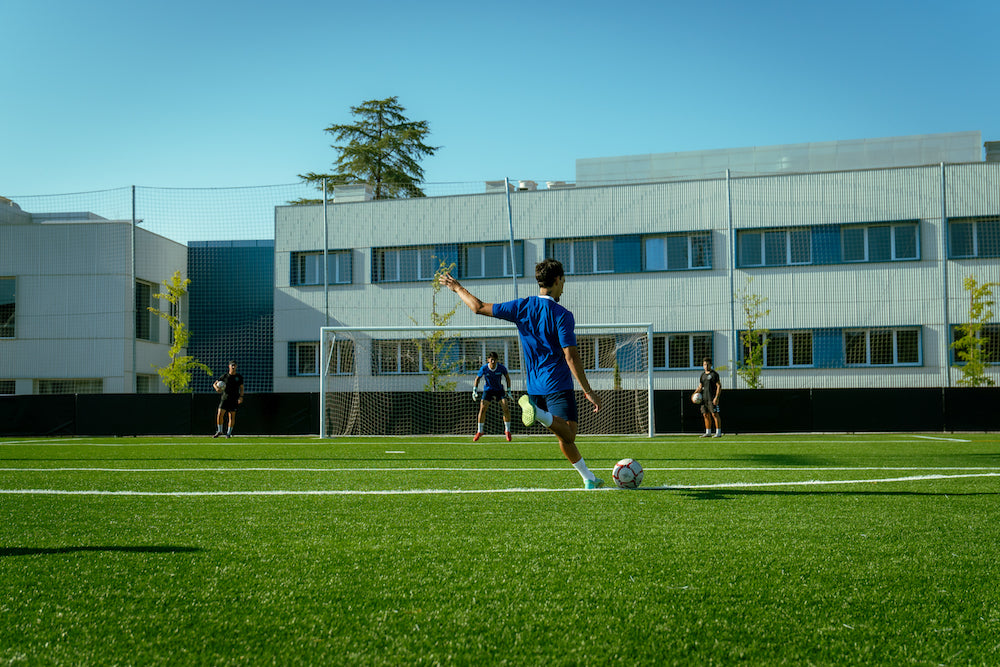


GFI Academy international soccer partnerships connect its player-development environment with professional clubs in Mexico and Spain, adding an international dimension to a pathway that begins in youth soccer. For parents, the important question is not simply which clubs are named, but how those relationships fit into a player's day-to-day development and what they do—and do not—promise.
Ask GFI Academy about your player's next step
Why do international soccer partnerships matter for youth player development?
A club relationship across borders can provide a wider soccer perspective. It may connect ideas about coaching, player development, or opportunities to learn from a different football culture. But a partnership is not a shortcut to a professional contract, a college roster, or a guaranteed trip. Families should look for specific, verifiable details about what the relationship means in practice.
For a young player, development still happens through consistent work: purposeful training, coaching feedback, match experience, and habits away from the field. International connections matter most when they complement those foundations rather than replace them. That is the context for understanding GFI Academy's documented partnerships with Chivas Guadalajara in Mexico and C.F. Fuenlabrada in Spain.
When assessing any academy, families can use these questions:
- What is confirmed? Look for named partners and specific activities, not broad promises about exposure.
- How does it connect to development? Ask how the experience supports technical, tactical, physical, cognitive, and personal growth.
- Who is eligible? Confirm whether an opportunity is for a particular age, team, or selection process.
- What is not included? Separate a partnership from guaranteed selection, travel, recruitment, or professional advancement.
International opportunities can also bring sport and education into the same conversation. For example, the U.S. Embassy and Consulates in Mexico describes a sports-diplomacy program connecting young Mexican soccer players with U.S. universities. That is a separate program, not a GFI partnership, but it illustrates how soccer experiences can intersect with educational opportunities.
Who are Chivas Guadalajara and C.F. Fuenlabrada?
Chivas Guadalajara is a prominent professional soccer club in Mexico. C.F. Fuenlabrada is a professional club in Spain. GFI Academy has documented international partnerships with both organizations. Those names represent different football settings and cultures; they should not be treated as identical programs or as a guarantee that every GFI player will train with either club.
GFI describes its own approach as the GFI Players Centric Methodology: a European-influenced, player-centered model focused on developing technical, tactical, physical, cognitive, and personal qualities. The international relationships sit within that larger development context. To understand the approach on its own terms, families can read about GFI's player-centered methodology and its emphasis on the complete player.
| Partnership | What is documented | What families should clarify |
|---|---|---|
| Chivas Guadalajara, Mexico | GFI has a documented international partnership with the Mexican club. | Ask what current activities or opportunities are available to your player's age group and team. |
| C.F. Fuenlabrada, Spain | GFI has a documented partnership, and GFI players have trained with the Spanish club's first team. | Ask who may be considered, how participation is determined, and what timing and costs apply. |
The table distinguishes confirmed relationship information from the details a family should verify directly. It does not imply that every player receives the same experience.
How does the Chivas relationship fit into player development?
Chivas Guadalajara gives GFI a documented connection to professional soccer in Mexico. That matters as part of a broader development environment because young players can learn that the game is shaped by different club cultures and football traditions. The partnership is also one part of GFI's international connections, alongside C.F. Fuenlabrada in Spain.
Families should avoid reading more into the relationship than the available information supports. A partnership alone does not establish that all players train at Chivas, are scouted by the club, or have a route to a roster. The practical step is to ask GFI what activities are active now, which players may take part, and how those activities relate to a player's current program.
As you evaluate the fit, consider the everyday training first. Does the coaching environment challenge your player at the right level? Is there a clear next step as skills and maturity develop? Does the program support character and learning as well as performance? GFI Academy serves Greater Houston families through Recreation, Competitive, and High Performance programs; its program overview can help families compare those parts of the pathway.
That distinction is useful when discussing the partnership with a coach or program director. Rather than asking only whether a player can go abroad, ask how a player is assessed during normal training and what feedback helps the player prepare. An opportunity is meaningful when it follows from development work and has a clear purpose for the athlete. Families can ask what learning objectives are attached to an experience, how a player will apply what they learn after returning, and whether there are alternative ways to develop similar skills locally.
A practical conversation can begin with the player's current goals. For example, a player working on decision-making under pressure might need a clear training objective and feedback plan, not simply a change of country or club setting. Ask how coaches would identify progress, what the player should focus on before an opportunity, and how that focus connects with the regular development plan. This keeps a potential international experience tied to a skill the player can practice and reflect on.
Related products


Helps support scholarship access for an under-resourced player
View product
What exposure pathway is documented with C.F. Fuenlabrada?
GFI's relationship with C.F. Fuenlabrada has a specific documented example: five GFI players have trained with the professional team's first team in Spain. This is a concrete instance of player participation. It should not be presented as a standard benefit, a guaranteed selection for future players, or a promise of a professional contract.
For parents, the distinction between a documented example and a guaranteed pathway is essential. One player's experience can show that an opportunity has occurred. It does not establish that the same opportunity is available to everyone or explain the process for future participants. Ask about the criteria, timing, costs, travel arrangements, adult supervision, and how a player is prepared before and after an experience abroad.
It is also useful to ask what the player is expected to bring back from the experience. Will the player have time to reflect on what felt different, what skills were challenged, and what habits they want to carry into the next training cycle? A family can discuss these questions before committing to any travel or special activity. The purpose is not to measure a young athlete only by whether they receive an invitation; it is to understand how the experience, if available, supports the player's longer-term development.
GFI's wider high-performance environment includes affiliations such as MLS Next, DPL, GA Aspire, and Texas Next. These are distinct competition and development contexts; an international partnership does not replace the requirements or selection processes of a league program. Families exploring specific pathways can review GFI's MLS Next information, DPL program information, and GA Aspire details.
What does an international partnership mean for your player's development at GFI?
It means GFI has named international club relationships that are part of its broader development story, including a specific example of GFI players training with C.F. Fuenlabrada's first team. It does not mean every player will travel, train abroad, be recruited, or become a professional. The best way to understand the value for your child is to connect the partnership to the player's present needs and ask clear questions.
Consider this sequence when comparing options:
- Start with your player's current stage. Identify what the player needs next: enjoyment and a foundation, more structured competition, or a higher-performance challenge.
- Review the weekly development environment. Ask about coaching, training objectives, feedback, match experience, and how progress is discussed with families.
- Ask what the partnerships currently provide. Request specific examples and distinguish confirmed activities from future possibilities.
- Understand selection and logistics. If an international opportunity is relevant, learn who qualifies, how a decision is made, and what the family would need to plan.
- Compare the whole pathway. Consider whether the program supports growth as a player and person over time, not only a single event or exposure opportunity.
GFI's player pathway is intended to develop more than match performance. Its Players of Life program is a structured element for competitive players and includes soccer development, leadership, social responsibility, and education. Parents can also review GFI Academy's background and approach to see how the academy describes its broader commitments.
How should families compare GFI with other soccer options?
Do not compare clubs on a partner name alone. Compare the full experience your player will receive. A useful conversation can cover the points below:
- Development plan: How will coaches identify strengths and areas for growth?
- Program fit: Which GFI program and competitive level suits the player's age, experience, and goals?
- Opportunity details: What international activities have taken place, and what is actually planned or available now?
- Family expectations: What time, travel, and financial commitments are involved in the program and any optional opportunity?
- Whole-person development: How do communication, leadership, education, and personal responsibility fit alongside soccer?
GFI's primary service footprint includes The Woodlands, Grand Oaks, Central Houston, and Sugar Land. Families can use the GFI locations page to consider where training takes place. If a player is ready to explore a competitive or high-performance option, GFI lists tryout information; ask about the appropriate program and current process for your player.
Parents can make the comparison more concrete by writing down the answers after each conversation. Separate what the academy confirms today from what might be possible later, and note what the player needs this season. If one program describes a particular opportunity, ask what it involves and whether that detail can be confirmed for the age group in question. Then compare it with regular coaching, training frequency, competition, communication, and family logistics. This simple record helps a young player and family weigh the full experience rather than making a decision based on a single exciting phrase.
What should a family expect from the development pathway?
International connections are one consideration within a much larger commitment. A player may benefit most from a setting where training is appropriately challenging, coaching is clear, and there is room to grow over several seasons. Families can think in terms of fit rather than prestige: is the player motivated by the program, does the level match their current readiness, and can the family support the schedule?
GFI's pathway serves players across Recreation, Competitive, and High Performance. Those programs serve different needs and stages, so an international connection should not be the first or only measure of whether a program is right. Players develop at different rates. A good conversation with the academy should connect the player's current strengths and goals with the program's expectations and the next steps available if the player progresses.
Parents can also ask how communication works over time. What feedback do players receive? How can a family raise a concern or discuss readiness for another level? Which developmental goals are within the player's control this season? Questions like these help keep an overseas opportunity in perspective: it can be exciting, but the foundation is the work and support the player receives week by week.
Families considering a higher-performance environment can also speak with GFI about how its coaching staff works with players. Use that conversation to understand the actual program and current opportunities, rather than assuming a named partner means automatic access.
Frequently Asked Questions
What international partners does GFI Academy have?
GFI Academy has documented international partnerships with Chivas Guadalajara in Mexico and C.F. Fuenlabrada in Spain.
Have GFI players trained with a professional team overseas?
Yes. GFI has documented that five of its players trained with C.F. Fuenlabrada's professional first team in Spain. This example does not mean the same opportunity is guaranteed for every player.
Does a GFI international partnership guarantee recruitment or a professional career?
No. A partnership and a documented training experience are not guarantees of recruitment, a roster place, a college opportunity, or a professional contract. Families should ask what is currently available and how participation is determined.
What should parents ask about an international opportunity?
Ask who is eligible, how players are selected, what activities are confirmed, and what timing, travel, supervision, and costs may be involved. Confirm details directly with GFI before making plans.
Contact GFI Academy to discuss program fit and partnership questions
International relationships can broaden a player's view of the game, but daily coaching, steady development, and the right program fit remain the foundation; speak with GFI Academy to understand what is relevant for your player now.