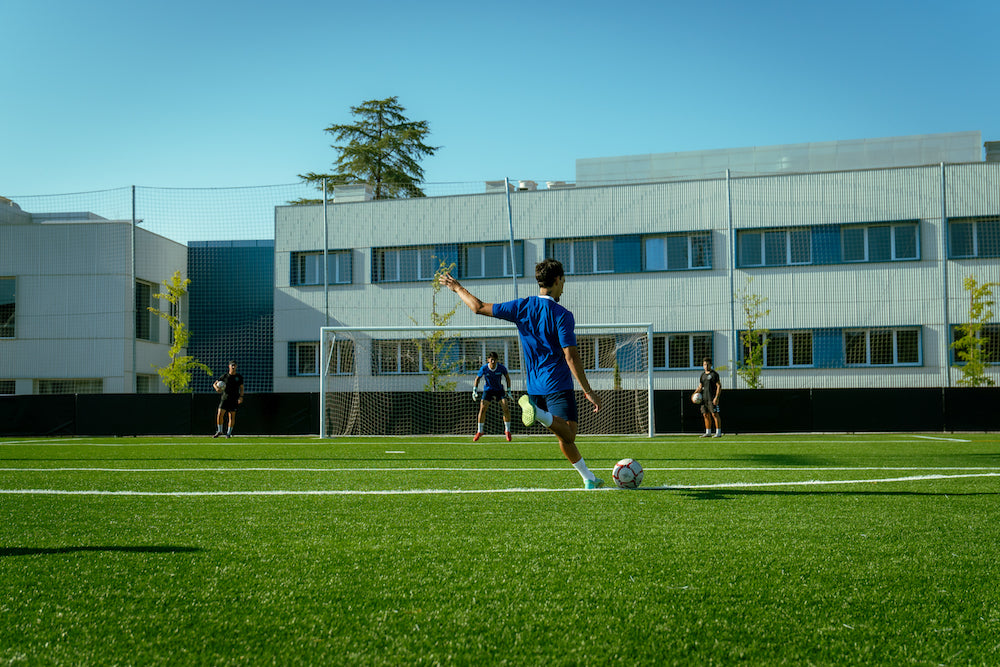


What is DPL soccer? DPL soccer is youth competition through the Development Player League. An elite national all-female league that gives girls clubs a platform to develop, compete, and work toward higher levels of play. For families, the right question is not simply whether DPL is better than another league. It is whether the team environment, coaching, competition, travel expectations, and development plan fit your player.
That distinction matters because a league name does not tell you everything about a player's experience. Parents should understand what DPL means, which age groups and pathway stages are available, how evaluations work, and what a club can genuinely offer before making a decision.
Looking at competitive and elite soccer pathways in Houston? Contact GFI Academy with questions about program fit and next steps.
The guide below explains the structure in plain language, then connects the national league concept to the way GFI Academy develops players in Greater Houston.
What is DPL soccer, in simple terms?
DPL stands for Development Player League. It is an elite national all-female youth soccer league built around club competition and player development. The league gives participating clubs a structured platform to compete against strong opponents, develop teams, and provide a pathway for girls who want a demanding soccer environment.
In practical terms, DPL is not a private training class and it is not an individual award. A player joins a club team that participates in the league. The quality of the experience depends on the club's coaching, player development model, team fit, competition schedule, communication, and support for the athlete and family.
What DPL means for a player
- High-level competition: Players train and compete in an environment designed for ambitious development.
- A girls-focused pathway: The league's national identity is centered on female youth players and the clubs that develop them.
- Progress through performance: Players are challenged to improve technical execution, tactical understanding, physical habits, confidence, and decision-making.
- A club-based experience: The coach, roster, training plan, and team culture matter as much as the league label.
The DPL website also describes an Emerging Talent Pathway, including NINES for U11 and U12. FUTURES for U13 and U14, DPL OPEN for U13 through U19, and Full Member competition for U13 through U19. These labels describe league pathway structures. They should not be treated as a guarantee that every club offers every stage or that a player automatically advances from one stage to another.
For parents, the clearest starting point is to ask what a specific club offers now. Ask about the age group, team level, training environment, travel, evaluation process, fees, and the development goals for the season. Those details show what DPL soccer will actually mean for your family.
How is DPL different from MLS Next and other pathways?
DPL, MLS Next, GA Aspire, and other competitive pathways can all serve ambitious players, but they are not interchangeable. They are different league or program structures with different club memberships, age groups, team environments, and advancement expectations. A useful comparison begins with the player's needs instead of assuming one label is the universal best choice.
| Pathway or program | What families should understand | Questions to ask |
|---|---|---|
| DPL | An elite national all-female league centered on girls club competition and development. | What DPL teams and age groups does the club offer? How does the club develop players beyond match results? |
| MLS Next | A distinct high-performance pathway associated with boys and men's player development in participating clubs. | What is the club's exact team structure, age group, coaching plan, and next-step support? |
| GA Aspire | A girls development pathway that may be part of a broader club progression, depending on the club and team. | Which players is the program designed for, and how does evaluation determine placement? |
| Competitive soccer | A broad program category. Competition level and development quality vary by club and team. | Will the training challenge the player while preserving a healthy, sustainable experience? |
At GFI Academy, DPL, GA Aspire, and MLS Next are approved pathway terms within a broader development system. GFI's documented high-performance offering includes elite tiers, while the right placement depends on the player's current needs and evaluation. Families can review the MLS Next pathway separately, then compare the coaching and team details for the specific girls pathway under consideration.
Is DPL better than another league?
There is no responsible one-word answer. DPL may be a strong fit for a girl who wants high-level competition and a girls-focused national platform. Another pathway may fit a different player, age group, learning style, or family situation. Compare training quality, roster fit, coaching communication, travel load, cost, playing opportunities, and the club's long-term development plan. The best choice is the environment that challenges the player appropriately and supports her development as a whole person.
What age groups and pathway stages does DPL include?
The DPL's official Emerging Talent information describes several stages for younger and older youth teams. The structure helps families understand how a club may introduce players to elite competition and develop them toward older age groups.
- NINES: U11 and U12, described as an entry point into elite competition and preparation for older DPL play.
- FUTURES: U13 and U14, designed to support early development before the high school age groups.
- DPL OPEN: U13 through U19, offering clubs a route to compete while building toward fuller DPL integration.
- Full Member: U13 through U19, described by the league as its highest member competition status.
Age-group labels can change as leagues update their structure, and a club may not offer every stage. A player's birth year, current team, ability, development needs, and club evaluation all matter. The age range listed for a league also does not mean a player is guaranteed a roster spot, a specific position, or a particular amount of playing time.
How should parents use the age-group information?
Use it as a starting point for a focused conversation with the club. Ask which teams are active for your player's birth year, whether the team competes in DPL. How the training calendar is organized, and what happens if the club believes another level is a better current fit. You can also ask how the program supports transitions between age groups as players mature.
GFI Academy's broader High Performance program is documented for ages 11 to 20 and includes approved pathways such as DPL, GA Aspire, and MLS Next. That range describes the broader program, not an automatic DPL age guarantee. Families should confirm current team availability and evaluation details directly with GFI before making plans.
How do DPL tryouts and evaluations usually work?
Each club sets its own evaluation process, so families should verify dates, fees, locations, and roster details directly. In general, a DPL evaluation gives coaches a chance to observe how a player performs in a competitive training environment. It should be treated as a two-way fit conversation, not as a promise of selection.
A practical preparation checklist
- Confirm the team details. Ask for the birth year, age group, location, training schedule, competition calendar, and expected travel before attending.
- Prepare the player physically. Arrive rested, hydrated, and ready to move. Avoid trying to transform a player's game in the days before an evaluation.
- Show repeatable habits. Coaches may notice first touch, passing choices, scanning, movement away from the ball, defensive effort, communication, and response after mistakes.
- Play with awareness. A player does not need to force every action. Making a good decision, supporting teammates, and recognizing space can be more valuable than attempting a difficult move.
- Ask for feedback. If placement is not immediate, ask what the player should develop next and when the family can revisit the conversation.
Parents should also evaluate the environment. Ask how coaches communicate with families, how player development is tracked. What support is available when a player is struggling, and how the club balances challenge with health and enjoyment. A high-performance setting should help a player grow, not turn every result into a judgment about long-term potential.
If you are exploring GFI's current pathway, review the GFI Academy DPL pathway and ask the academy which evaluation or tryout option matches your player's age and goals. Registration and parent communication may be handled through PlayMetrics, but families should confirm the current process before registering.
What can players gain from competing in DPL soccer?
Playing in a demanding league can create useful development opportunities, but the value comes from the daily environment rather than the acronym alone. When training and competition are well matched to the player, DPL soccer can help an athlete build habits that carry into the next stage of the pathway.
Development benefits to look for
- More purposeful decisions: Competitive moments ask players to read pressure, recognize options, and act with greater speed and clarity.
- Technical consistency: Strong opponents make first touch, passing detail, ball protection, and finishing habits easier to evaluate.
- Tactical understanding: Players learn how team shape, spacing, pressing, transition, and role responsibilities connect.
- Resilience: A constructive environment teaches players to respond to mistakes, feedback, setbacks, and changing match situations.
- Team responsibility: Players practice communication, preparation, accountability, and support for teammates.
Families should be careful with claims about exposure or recruitment. Participation in a league does not guarantee a college opportunity, a professional contract, a showcase result, or selection for another team. Ask how the club supports players who are interested in college soccer, what tools are available, and what the family is responsible for doing.
GFI Academy describes its Players Centric Methodology as an approach that develops technical, tactical, physical, cognitive, and personal qualities. That whole-player view is important in an elite environment. The goal is not only to win the next match. It is to help the player understand the game, build character, stay engaged in learning, and become a confident teammate and person.
The best sign of progress is a player who can explain what she is working on, apply coaching in games, and remain motivated through challenge. Parents can support that process by focusing conversations on effort, decisions, learning, and wellbeing instead of treating one evaluation or result as a final verdict.
How GFI Academy prepares players for a DPL pathway
GFI Academy presents a complete development pathway for Greater Houston families, from Recreation and Competitive soccer through High Performance. Within that system, DPL is one of the approved girls pathways alongside GA Aspire. The academy also documents MLS Next as a separate elite pathway, so families can discuss the right direction instead of assuming every player should follow the same route.
Preparation starts with the player, not a league label. GFI's Players Centric Methodology is designed to develop technical, tactical, physical, cognitive, and personal qualities. In a practical training week, that means players should have opportunities to improve skills with the ball, understand game problems, build athletic habits, communicate, and respond to coaching. It also means the club should recognize that development is not identical for every age or player.
What families can evaluate at GFI
- Pathway fit: Ask whether DPL, GA Aspire, MLS Next, Competitive, or another program best matches the player's current stage.
- Development plan: Ask what the player is working on now and how coaches will communicate progress.
- Training environment: Learn how sessions challenge players and how the program supports confidence, character, and education.
- Family logistics: Confirm location, schedule, travel expectations, fees, communication, and registration steps.
GFI serves families across The Woodlands, Grand Oaks, Central Houston, and Sugar Land, with its main facility and GFI Performance Center in Spring. The academy's verified resources also include the GFI High Performance program and its DPL information page. Those pages are useful starting points, but a direct conversation is still the best way to confirm current team availability and evaluation details.
For families comparing options, look for a club that can explain the next step clearly. A strong pathway should make room for ambition while helping players become resilient, thoughtful, and responsible. That is the foundation for becoming a Player of Life, whether the athlete's next goal is a higher team, college soccer, or continued growth in the game.
Frequently Asked Questions About DPL Soccer
What does DPL stand for in soccer?
DPL stands for Development Player League. It is an elite national all-female youth soccer league that gives participating clubs a platform for competition and player development.
Is DPL soccer only for girls?
The DPL is an all-female youth soccer league. A club may offer other boys and girls pathways, but families should not assume that a DPL label applies to every team in the club.
What age groups can play in DPL?
The DPL's official Emerging Talent information describes NINES for U11 and U12, FUTURES for U13 and U14, and DPL OPEN and Full Member pathways for U13 through U19. Current offerings vary by club, so confirm the team and birth-year details before planning.
Is DPL better than MLS Next or another league?
Not universally. DPL and MLS Next are different pathways with different structures and player audiences. The right choice depends on the player's goals, development needs, team fit, coaching, schedule, travel, and family priorities.
How can I learn whether GFI Academy's DPL pathway is a fit?
Review GFI Academy's DPL information, then contact GFI Academy with your player's age group and questions. The academy can explain current evaluation, program, and registration steps. Do not assume that reading a program page guarantees roster placement.
Explore the right next step for your player
DPL soccer can be a meaningful part of an ambitious player's development when the team, coaching environment, competition, and family logistics fit. If you are comparing pathways in Greater Houston, review GFI Academy's program information and bring your specific questions to the academy. Contact GFI Academy to ask about current DPL options, evaluations, and the next step for your player.