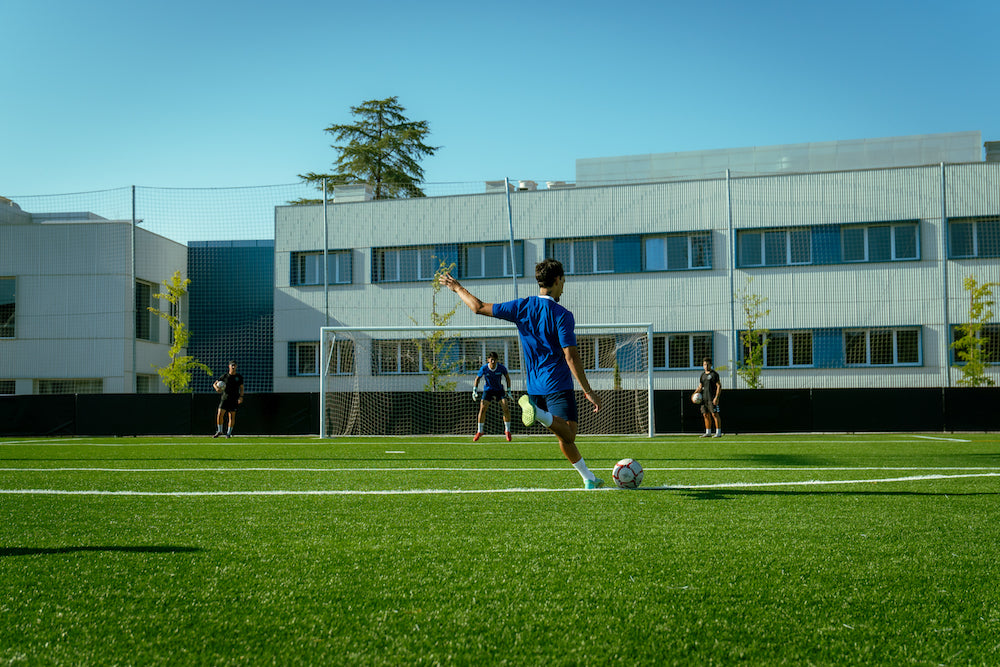


Soccer skill development by age should begin with what a young child can enjoy and practice, not with pressure to perform like an older player. From ages 4 to 6, children are learning how their bodies move, how a ball responds, and how to take part in a group activity. Families can look for simple, repeatable experiences that build comfort, curiosity, and a positive connection with the game.
Explore GFI Academy Recreation
What is realistic soccer development at ages 4 to 6?
Progress at this age often appears in small moments: a child follows a ball, tries a new movement, remembers a simple direction, or joins a game again after a mistake. Those are meaningful foundations. A young player does not need polished technique or a fixed position to benefit from soccer. Familiarity and willingness to participate are real forms of progress.
Children develop at different rates. A useful program gives them repeated chances to move, experiment, and play without making every activity a test. Keep goals broad and flexible. The aim is not to rush a child toward a particular competitive level, but to help them enjoy learning and become more comfortable participating. A child who watches for a few minutes before joining may still be taking in the activity and deciding it feels safe.
For parents, this means observing the process rather than judging a single practice. Does your child return to an activity after a miss? Are they more willing to try a ball activity than they were last month? Do they recognize a familiar routine? Small changes over time tell you more than comparing one child with another.
Which skills can families encourage first?
Early soccer experiences can introduce several connected areas of development. A child may work on several of them in the same playful activity.
- Movement: running, stopping, changing direction, balancing, and coordinating feet with the rest of the body.
- Ball familiarity: gently rolling, tapping, chasing, and stopping a ball, using either foot when it feels natural.
- Awareness: noticing where the ball is, recognizing open space, and responding to a simple cue.
- Social participation: taking turns, sharing space, listening briefly, and trying an activity with other children.
- Confidence: attempting a new task, recovering after a miss, and celebrating effort as well as success.
These are starting points, not a checklist every child must complete by a birthday. Some children will be eager to dribble; others may first enjoy running after the ball or watching before joining. A supportive adult can invite participation without turning reluctance into a confrontation. Keep the invitation clear and low-pressure: “Want to roll it to me?” can be easier to accept than a long explanation of what the child should do.
How can practice stay fun and age-appropriate?
Keep activities short, clear, and active. A simple home session might take ten minutes. Set up a few soft markers, invite the child to dribble between them, then let them choose where to move next. Finish with a playful challenge, such as stopping the ball near a parent or passing it back and forth. Treat the activity as shared play, not a performance review.
- Start with free movement. Let the child explore the ball and space without correcting every touch.
- Offer one simple idea at a time, such as “tap the ball gently” or “stop it by the cone.” Demonstrate once if useful.
- Take turns so the adult demonstrates and the child gets plenty of attempts.
- Pause when attention fades. End while the experience is still positive, rather than stretching it until frustration appears.
- Notice effort specifically: “You tried again after the ball rolled away.” Specific encouragement helps a child understand what they did.
Use a safe, open area and an age-appropriate ball. Avoid long lines where children wait while one player takes a turn. The more chances each child has to move and try, the more engaging the activity can be. Families can see how GFI Academy’s player-centered methodology describes its development approach and review the Recreation program for an entry-level option.
Three simple activities to try
Red light, green light: The child moves with the ball on “green” and stops it on “red.” Keep the distance short and let the child call the cues sometimes. The point is to explore starting and stopping, not to demand a perfect touch.
Find a home: Put down two or three large markers and invite the child to move the ball toward one. Change the “home” marker after each turn. This gives the child a reason to look up and choose a direction while keeping the task manageable.
Pass and celebrate: Sit or stand a short distance apart and roll or gently pass the ball back and forth. Vary the distance only if the child remains engaged. Celebrate a good try, including an imperfect pass that still reaches the partner.
If an activity stops being enjoyable, simplify it. Use fewer markers, shorten the distance, or return to free play. Repeating a comfortable activity is not a setback; it can help a young player feel ready to try a new variation later.
How do age-related goals change from 4 to 6?
The table is a flexible guide, not a developmental test. Children may show these interests at different times, and a single season may include a wide range of experience.
| Age | Helpful emphasis | Example activity | What progress may look like |
|---|---|---|---|
| 4 | Enjoy movement and become familiar with the ball | Chase, stop, and gently tap a ball | Willingness to join and explore |
| 5 | Try basic direction changes and simple group routines | Dribble around a few large markers | More attempts and awareness of space |
| 6 | Combine movement, ball control, and simple cooperation | Small-sided play or a partner pass | Trying a simple idea in a game setting |
These examples are not a promise that every child will master a skill at a specific age. Comfort, attention, previous play, and individual development all affect what a child is ready to try. The Massachusetts Youth Soccer Association’s U6 4v4 survival guide discusses helping young players understand field boundaries and direction of play, illustrating how simple game context can be introduced without expecting advanced tactics.
Families can also read GFI Academy’s program overview to understand how its soccer experiences fit within a broader pathway. For this age range, a broad pathway matters less than finding an appropriate first environment and letting the child’s interest guide the pace.
How can parents tell whether a child is ready for a group program?
Readiness is not one skill or one behavior. Consider the whole situation: whether your child is curious about the activity, can separate briefly from a parent if needed, can follow a short cue some of the time, and can take turns with help. These are observations, not entry requirements. A thoughtful coach can support children who are still learning how a group activity works.
Before a first session, explain what will happen in simple terms: there will be a coach, other children, a ball, and time to play. Let your child know you will be nearby if that is the arrangement. Avoid promising that they will love it or be the best; instead, say that they can try it and see how it feels. If the child is hesitant, ask the program how families handle a gradual introduction.
Afterward, ask open questions such as “What part did you like?” or “Would you want to try that game again?” A young child may answer through behavior more than words. Enthusiasm is useful information, but so is needing time to adjust. One difficult first day does not necessarily predict how the next few sessions will go.
What should parents look for in a program?
For a young child, the setting matters as much as the activity. Ask how coaches keep children involved, how they respond when a player is shy or distracted, and whether sessions balance guidance with play. The atmosphere should encourage children to try rather than make them feel they are being judged.
- Are instructions short and understandable for a young child?
- Do children spend much of the session moving instead of waiting in lines?
- Can a child take a break or rejoin without being shamed?
- Does the program communicate clearly with families about schedule and expectations?
- Is the location practical for your family’s routine?
Look for signs that coaches notice individual effort, not only the child who already knows how to play. Ask whether activities can be adjusted when a child needs a simpler version or an extra demonstration. You can also ask how games are organized so that children get chances to participate, rather than spending most of the time waiting for a turn.
GFI Academy offers Recreation for children ages 4 to 14, with a fun-focused entry point and Saturday games. Families can check GFI Academy locations across The Woodlands, Grand Oaks, Central Houston, and Sugar Land. The club’s background provides further context about the organization. Families comparing experiences can use these details alongside their own schedule, travel, and child’s preferences.
How can families compare time, cost, and fit?
Before enrolling, compare the full commitment rather than looking only at the practice itself. Ask what the seasonal calendar requires, how games fit into weekends, what equipment is needed, and how registration is handled. A program may be a good fit on the field but difficult to maintain if the location or schedule creates stress for the household.
| What to compare | Questions to ask | Why it matters |
|---|---|---|
| Schedule | How often are practices and games, and when are they held? | Helps the family plan school, work, and weekend routines. |
| Location | Which training site serves our area, and where are games held? | Travel time affects whether the season feels manageable. |
| Fees | What is included, and what is purchased separately? | Clarifies the full cost before registration. |
| Participation | How are beginners supported, and how much time do children spend active? | Helps match the environment to the child’s current experience. |
GFI Academy’s stated Recreation price is $380 for full seasonal payment or $395 through the payment plan, plus a separate $150 uniform kit. Payment plans and financial aid are available, and the 10% family discount applies for three or more players. Uniforms are purchased separately through Soccer Post. Families should confirm current details before registering, since dates and arrangements may vary by season.
Use the Recreation page for program information and the locations page to consider practical travel. The Competitive pathway is a separate option for older or more experienced players whose families are evaluating a more structured level; it is not a required next step for every young child.
How can families support development between sessions?
Support does not require a formal training plan. A few low-pressure opportunities to move can complement a program: kicking a ball in an open space, playing a simple chase game, or walking to a park. Keep other interests in the week too. Variety gives children room to develop general movement skills and prevents soccer from feeling like an obligation.
Adults can help by making equipment accessible, joining in when invited, and responding calmly to mistakes. Avoid giving several instructions at once. If the child is struggling to stop the ball, for example, show one gentle touch and then let them try. If frustration grows, change the task or call it a day. Learning is not measured by how many corrections a child can tolerate.
Use praise that describes actions the child can repeat: “You looked where you wanted the ball to go,” or “You came back and tried again.” This keeps attention on choices and effort rather than fixed labels such as “natural talent.” The goal is a child who feels able to explore and keep learning, not one who is afraid to make a mistake.
Frequently asked questions
Does a 4-year-old need soccer experience?
No. A young child can begin by getting comfortable with the ball, moving in a group, and trying activities at their own pace. Ask the program how it welcomes beginners and how coaches support a child who needs time to observe before joining.
Should children practice soccer every day?
Not necessarily. Short, enjoyable opportunities to move and play are more useful than turning every day into a formal training session. Allow time for rest and other interests, and let the child’s enthusiasm help shape how often you play together.
What if my child is shy or loses focus?
That can be part of trying a new activity. Let the coach know what helps your child feel comfortable, and ask how children may observe, take a brief pause, and rejoin. Readiness can change as the setting becomes familiar.
When should we consider a more structured program?
Consider one when your child is curious about playing with others and your family can manage the schedule. A structured program should match the child’s current needs, not an imagined future outcome. Families can compare the Competitive pathway for later stages, while recognizing that development can follow many individual timelines.
Learn about Recreation at GFI Academy
What should your family take away?
From ages 4 to 6, soccer development is about building a welcoming foundation through movement, ball exploration, confidence, and shared play. Choose an experience that fits your child and family today, and let skills grow through patient practice over time.